
DIPLOMACY
EXPANDING MILITARIES' ROLE IN NON-TRADITIONAL SECURITY CHALLENGES
15 Apr 2014
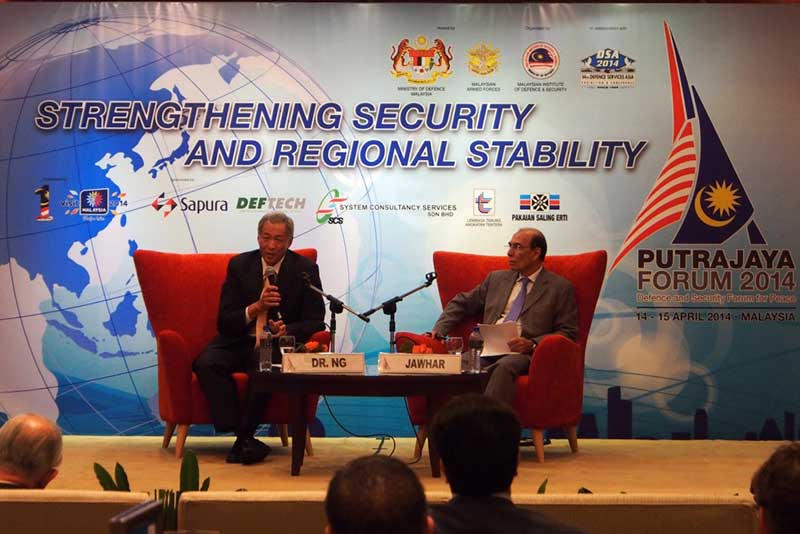
"For centuries, countries have raised militaries for the primary purpose of protecting their countries' sovereignty and territorial integrity. But today, militaries are increasingly (being) called upon to deal with transnational security challenges related to terrorism, drug and human trafficking, counter-proliferation, natural disasters, biological pandemics and cyber security."
This was Minister for Defence Dr Ng Eng Hen's central message at the 3rd Putrajaya Forum, held at the Seri Pacific Hotel in Kuala Lumpur on 14 Apr.
The Forum, themed Strengthening Security and Regional Stability, was held in conjunction with the 14th Defence Services Asia Exhibition and Conference.
In his keynote address, Dr Ng expressed Singapore's support for the Malaysian Government's handling of the MH370 incident. Singapore had deployed a submarine rescue vessel, a frigate with a naval helicopter, a missile corvette, and C-130 and Fokker-50 aircraft for the search and locate operation for the missing flight.
Highlighting the trend of militaries moving beyond territorial defence, he said that "international response to the MH370 incident is a vivid illustration of the expanded roles of modern militaries today . . . and shows the extent in which militaries now actively contribute in non-traditional areas".
To prove that this shift was necessary and justifiable, Dr Ng explained that natural disasters and transnational threats not only overwhelm the affected nation, but the effects can also spill over to other countries. Moreover, collaborative work helps to build trust among the countries and their militaries. Lastly, today's ever-evolving security threats, such as terrorism and cyber-threats, often cross the lines of civilian and military arenas. Therefore, the military may be required to step in during seemingly-civilian crises.
Dr Ng also discussed three ways in which militaries can improve their effectiveness in taking on these non-traditional security challenges, the key to which is cooperation and coordination.
The first is to leverage technology to improve information and intelligence collection, for instance, through the Republic of Singapore Navy's Information Fusion Centre (IFC). Using advanced software, the IFC puts together data from more than 30 countries to generate a common maritime picture that identifies anomalies and potential threats at sea. It was activated to assist in the MH370 search efforts when the area of operations had moved to the Southern parts of the Indian Ocean.
Dr Ng said the second way to improve militaries' effectiveness in dealing with non-traditional security challenges was to enhance civil-military cooperation by maintaining a network across government agencies, civilian non-government organisations as well as the public, private and people sectors during peace time. He said "Singapore will do more to increase interactions between civilian agencies and militaries for HADR (Humanitarian Assistance and Disaster Relief)", in parallel with the proposal he made, at the recent informal dialogue between the United States and ASEAN Defence Ministers, for Singapore to host a regional crisis coordination centre.
The third way, said Dr Ng, was to strengthen regional military cooperation and coordination through joint exercises to build capabilities and improve effectiveness. The ASEAN Defence Ministers' Meeting (ADMM)-Plus had already embarked on this, conducting its first joint exercise last June, whereall 10 ASEAN member states and eight "Plus" countries - Australia, China, India, Japan, the Republic of Korea, New Zealand, Russia and the US - came together to conduct a large-scale HADR/Military Medicine exercise, hosted by Brunei.
While exercises between militaries are important, it is also important to build an architecture that can better respond to natural disasters, said Dr Ng. This was why he had offered Singapore's Changi C2 Centre, which houses the IFC, to host a regional HADR coordination centre.
While in Putrajaya, Dr Ng had earlier met Malaysian Prime Minister Najib Razak and Malaysian Defence Minister Dato' Seri Hishammuddin Hussein. He was also invited to a durian feast by the host country.

ALSO READ IN DIPLOMACY
17 countries launch new framework for cooperation on critical underwater infrastructure
30 May 2026
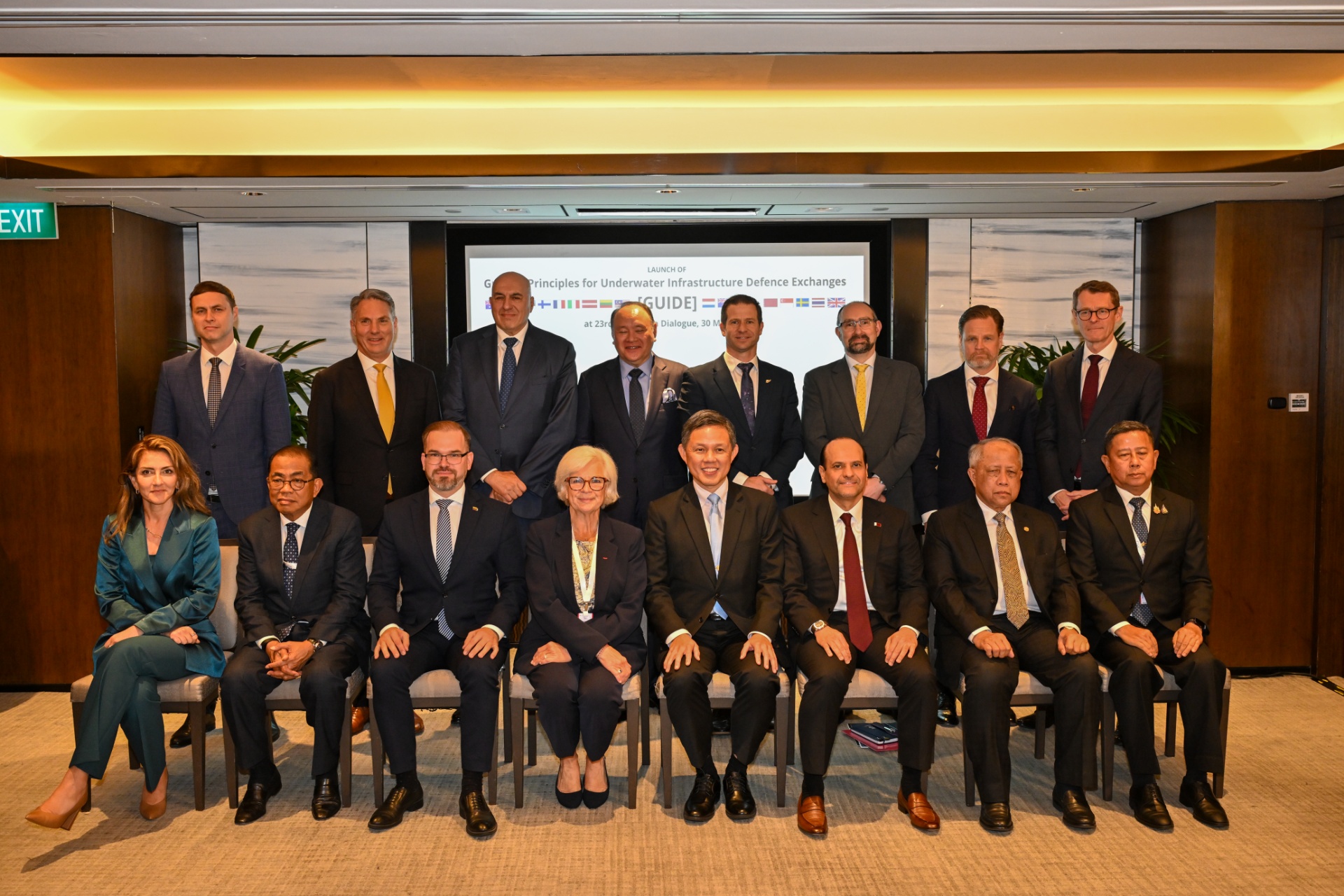
Launched on the sidelines of the 23rd Shangri-La Dialogue, GUIDE is a new framework that brings together countries for defence cooperation in enhancing the security of Critical Underwater Infrastructure.
Going alone is not the answer to insecurity – Mr Chan
01 Jun 2025
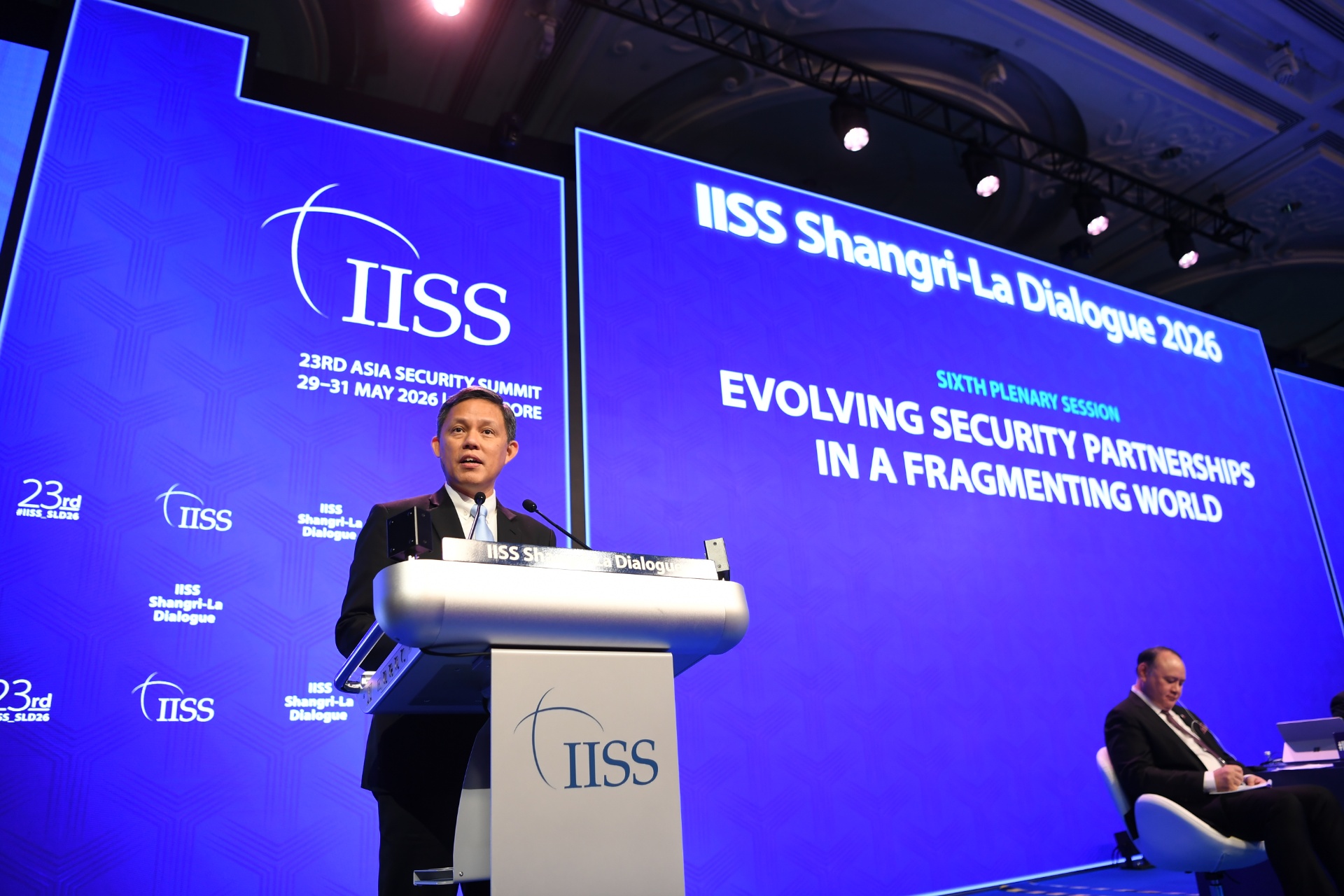
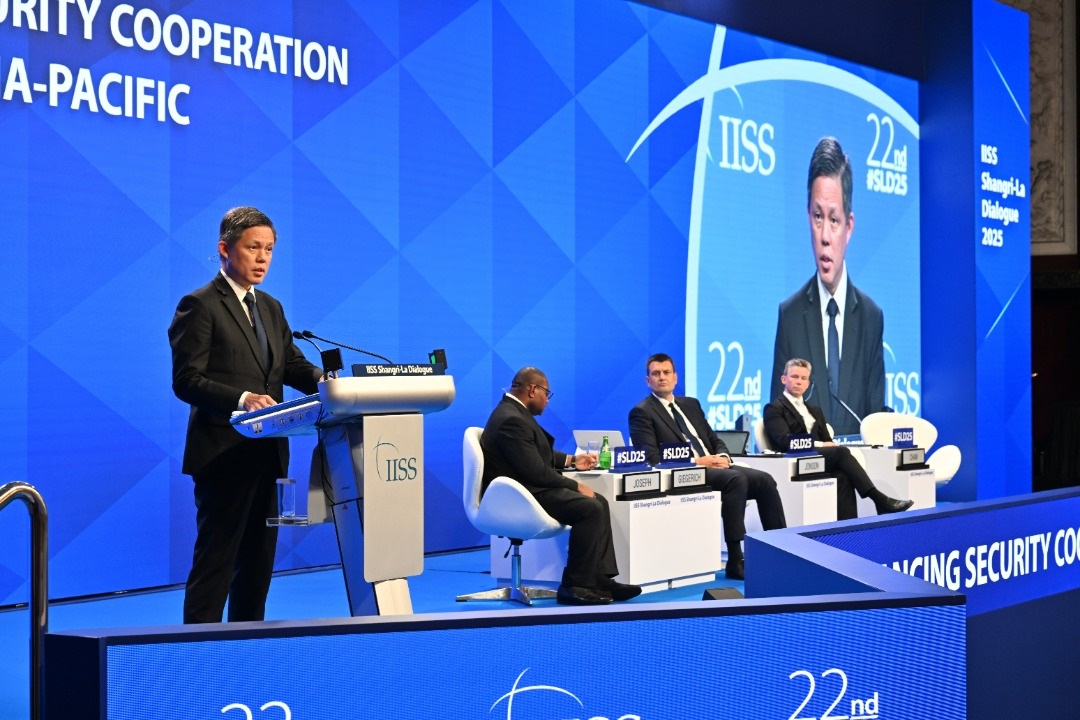
“Going alone is not the answer to insecurity”, emphasised Minister for Defence Mr Chan Chun Sing at the Shangri-La Dialogue (SLD), held from 30 May to 1 Jun. This was one of his main points at his speech at the sixth plenary session on 1 Jun.
A call for peace at Shangri La Dialogue
02 Jun 2024
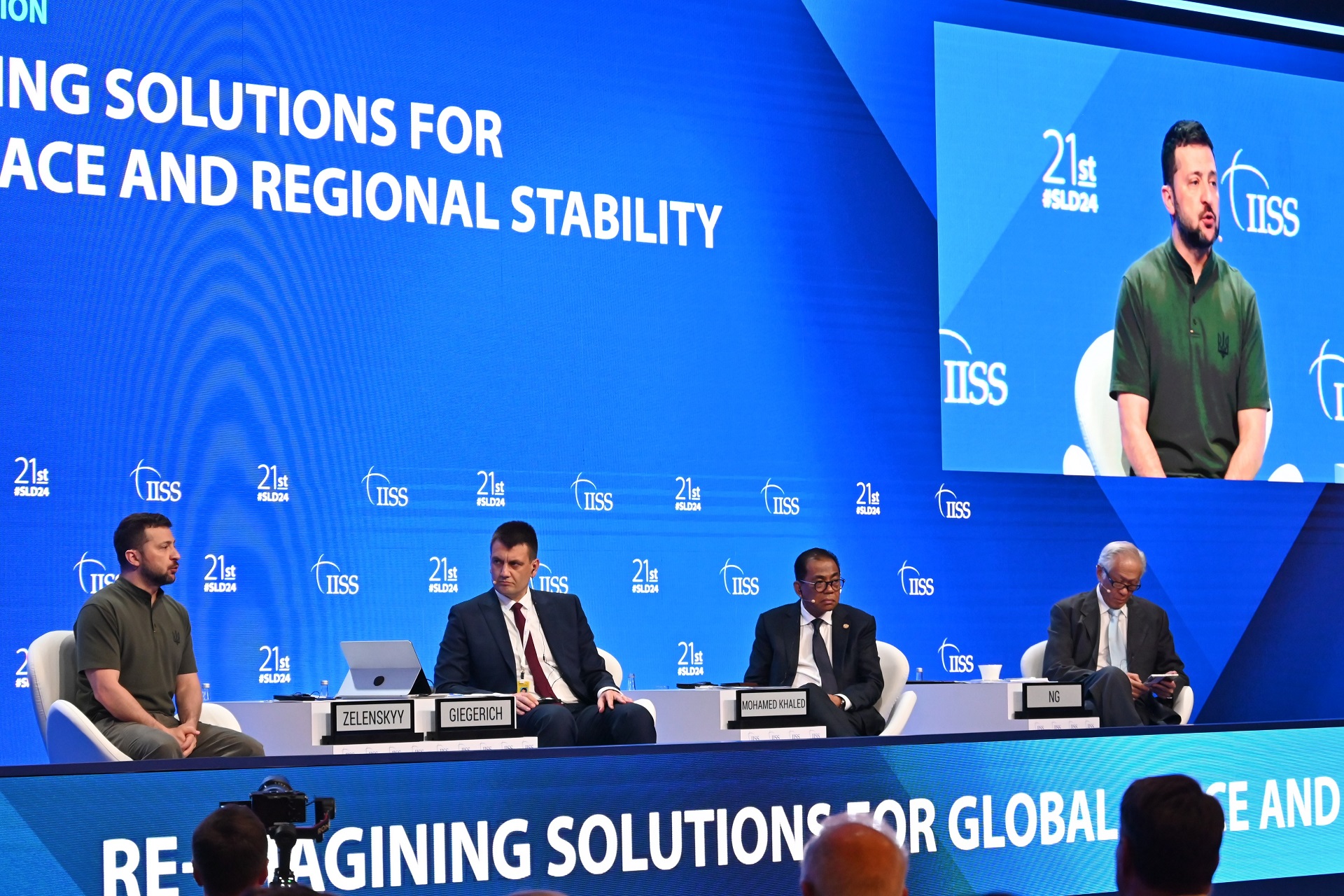
A repeated call for peace, especially in Asia. This was Minister for Defence Dr Ng Eng Hen's central message at the 21st Shangri La Dialogue (SLD), held from 31 May to 2 Jun.