
TECHNOLOGY
DRONE KILLERS
30 Apr 2019
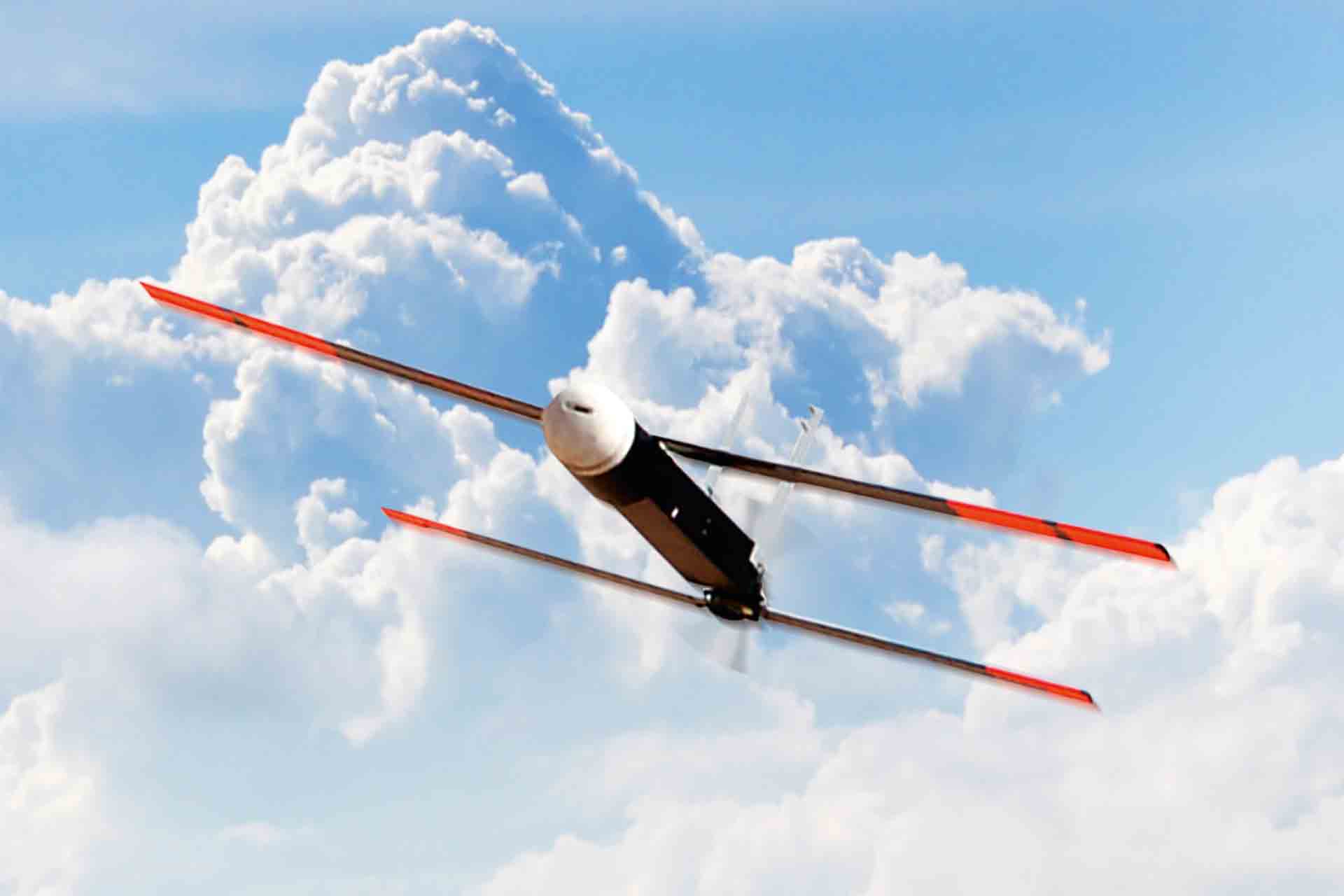
The United States (US) Army will use a new variant of Raytheon’s Coyote Unmanned Aerial Vehicles (UAVs) to go after hostile drones.
Weaponised drones have become an emerging threat in the battlefield.
The use of drones by terrorist groups like the Islamic State in Iraq and Syria are getting increasingly sophisticated, with commercial systems modified to carry not just cameras for surveillance, but bombs for attacks against coalition troops in Iraq and Syria.
In addition to their manoeuvrability, some drones may be resistant to small arms fire, making it difficult for ground troops to destroy them.
Using expensive, high-end interceptors like the Patriot surface-to-air missile system to go after these low-cost weaponised drones, however, would be like killing flies with a cannonball.
Defence contractor Raytheon has developed a cost-effective solution — the expendable Coyote drones.
Kamikaze drones
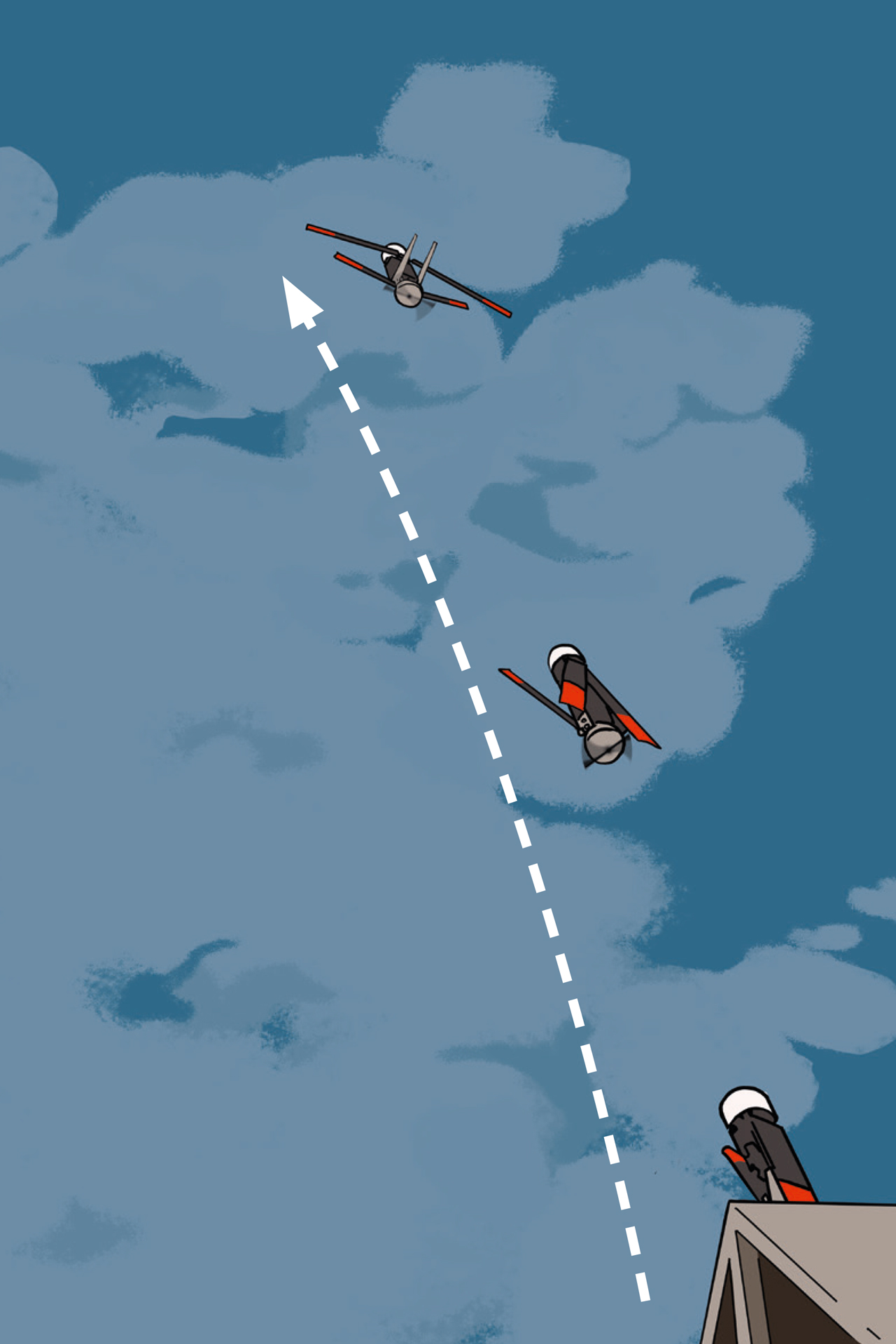
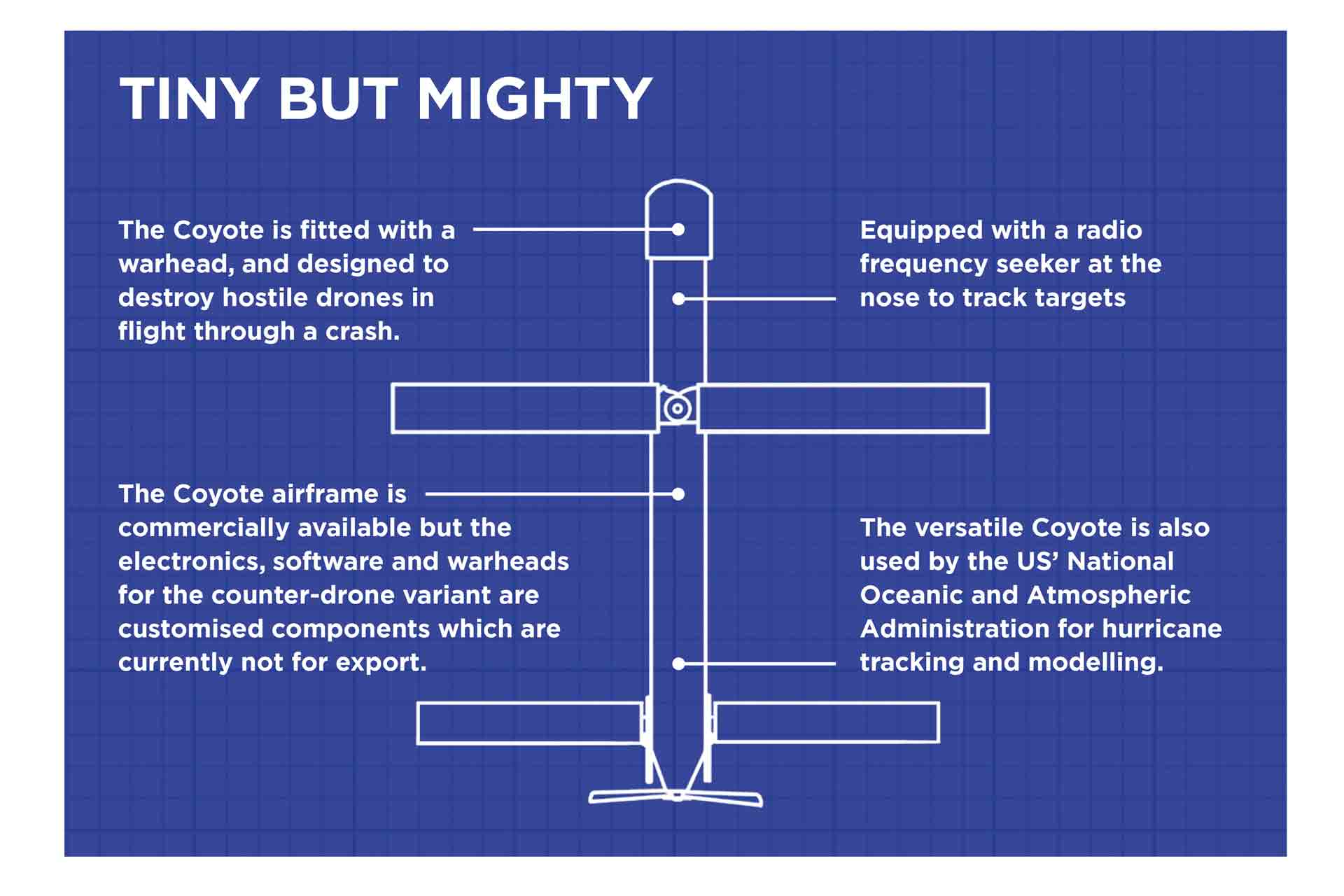
Fitted with small warheads, these lightweight drones are designed to destroy hostile drones in flight through a crash. The concept is similar to how the Japanese crashed their kamikaze aircraft into enemy ships during World War II.
The Coyotes are directed to their target by an advanced electronically scanned array KRFS (Ku band Radio Frequency System) radar, which can spot and accurately track drones of all sizes.
In addition, the Coyotes are tube-launched — eliminating the need for a runway — from the ground, air or a ship. The system can operate up to an hour and be adapted for surveillance, electronic warfare or strike missions.
"Our quickly transportable system, that tracks low-swarming threats with KRFS and eliminates those threats with Coyote, is a game changer for the US Army," said Dave Gulla, Raytheon's Mission Systems and Sensors vice president, in a media statement in July 2018.
Meeting the Army's operational needs
At a press conference at the Farnborough Airshow in July 2018, the Massachusetts-headquartered company announced that Raytheon was in the midst of delivering the counter-drone variant of the Coyote to the US Army in order to meet an urgent operational need.
"We are currently under funding by the US Army to develop and deploy these devices by the end of this year," Dr Thomas Bussing, Raytheon's vice-president of advanced missile systems, according to aviation data and analytics website Flight Global.
The US Army has already used the Coyote for intelligence, surveillance and reconnaissance operations. The new variant, known as block 1B, is equipped with advanced sensors and warheads for counter-drone missions.
As of last July, Raytheon had delivered 40 KRFS radars, with more than 32 drones.
Dr Bussing added that the Coyotes are capable of taking down quadcopters, and other types of Class 1 and Class 2 unmanned air systems.
Unmanned air systems are classified into five different classes according to their sizes, with Class 1 being the smallest.
"These quadcopters are actually fairly challenging. They have a resin structure, which is actually very difficult to penetrate," he explained. "They are very resilient to small arms fire and so forth. But the warheads are very capable of destroying them."
In a test conducted for the US Army last year, the Coyotes destroyed 11 of 12 targets. All tests for the block 1B variant have been completed.
More powerful variant
Raytheon is also developing a block 2 variant that can fly faster and further, and take down larger enemy drones. They can also be fitted with a swarming feature that would allow them to work together, said Dr Bussing.
"There's some very unique software that are on board these vehicles that allow them to communicate and to make decisions as to where and how they're going to engage threats," he noted. "You may have a swarm of them engaging a swarm of (drones) that are coming in."
The block 2 variant could potentially be fielded as early as 2019, he added.

ALSO READ IN TECHNOLOGY


Locked & Loaded: SAF Shooting Contingent weapons
26 Nov 2025
AI joins the fight in national cyber defence exercise
12 Nov 2025
AI and closer collaboration among agencies and industry are taking centre stage in this year’s Critical Infrastructure Defence Exercise (CIDeX).
They built this city
01 Oct 2025
Turning vision to reality: the team behind SAFTI City clinches the Defence Technology Prize 2025 Team (Engineering) Award!