
TECHNOLOGY
DEVELOPING EFFECTIVE CRISIS LEADERS
28 Feb 2017
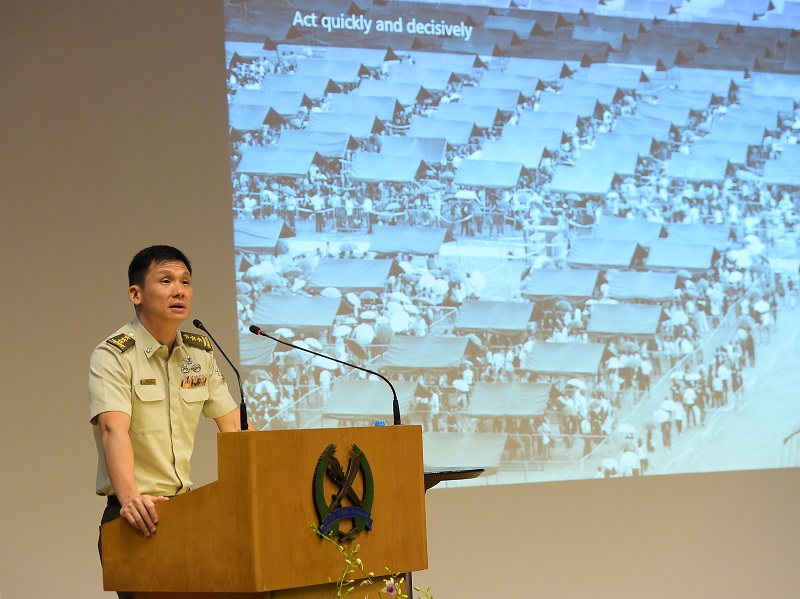
If a crisis occurs, the Singapore Armed Forces (SAF) must be ready and prepared. During peacetime, crises can come in the form of accidents during training, operations or events that the SAF is tasked to respond to.
In such situations, effective leadership is key in ensuring that the crisis is well-managed and the standing and credibility of the SAF is upheld, said Chief of Defence Force Lieutenant General (LG) Perry Lim.
"Crisis leadership starts with having the right instincts to discern a potential crisis when things occur or when signs appear."
LG Lim was addressing SAF and Ministry of Defence commanders and leaders at the SAF Leadership Development Seminar (SLDS) 2017 on 24 Feb.
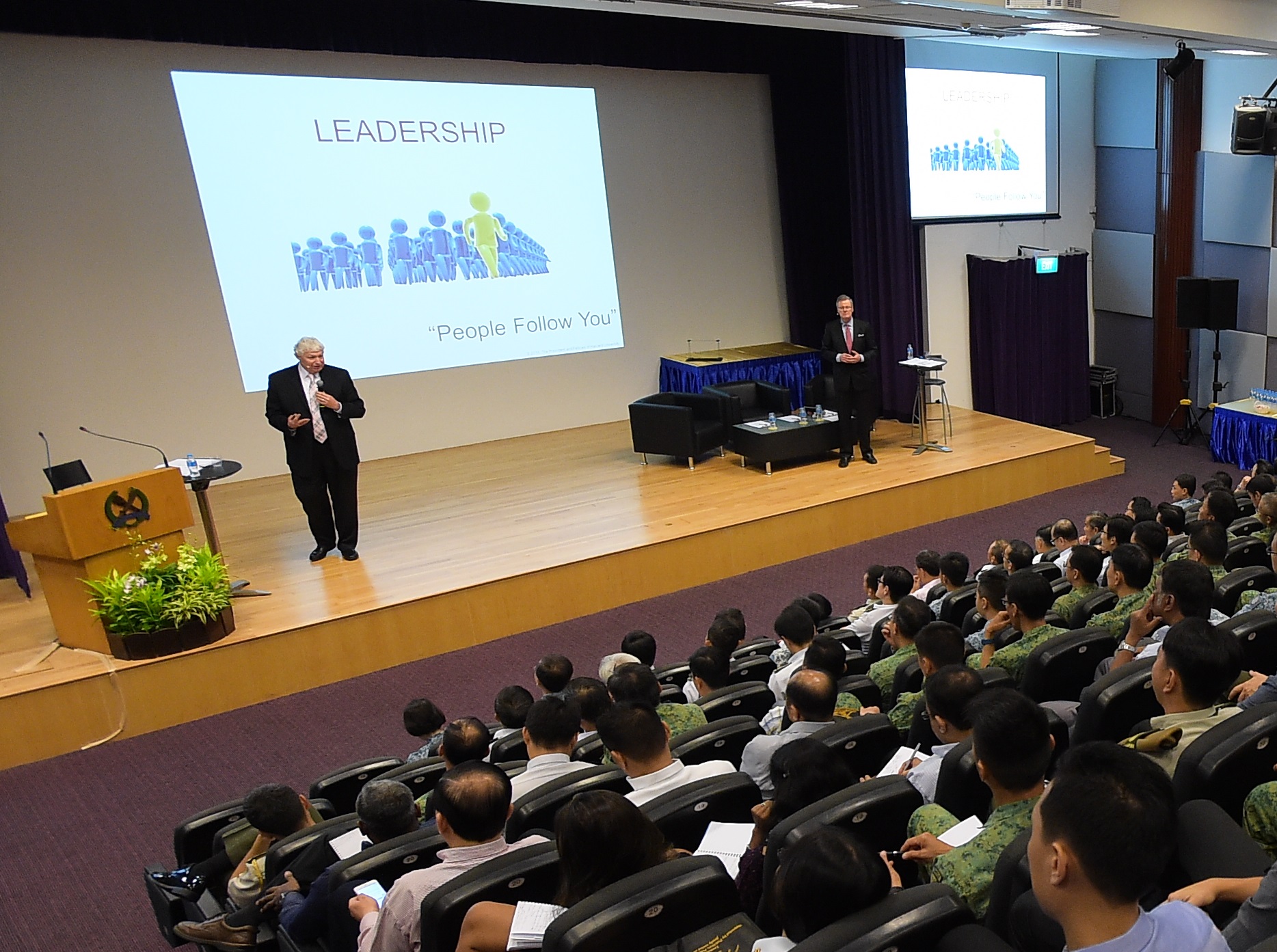
Held at SAFTI Military Institute, the annual event brings together local and overseas experts to share their knowledge and experience on leadership and leadership development.
Using examples such as the engine failure of one of the Republic of Singapore Air Force's F-16 fighter jets in 2015; the Air Asia QZ8501 crash in 2015; as well as the SAF's response to the SARS crisis in 2003, and the peacekeeping operations in Dili, East Timor in 2003, LG Lim highlighted the types of dilemmas that leaders can face in handling emergency situations.
He also emphasised the importance of self-awareness and sharp decision-making skills in managing crises: "As the people in command and working in the ops community, we need to hone our instincts to be able to discern and detect what a potential crisis situation is for the SAF."
Noting that there was no one-size-fits-all solution in crisis leadership, LG Lim called upon the SLDS participants to anchor their decisions in the SAF Core Values and Purpose.
"Ultimately, our response to a crisis really depends on our values and our training. In a crisis situation, you ought to bring your mind back to your training and put your heart right on your purpose and the professional values that we have imbibed in the SAF."
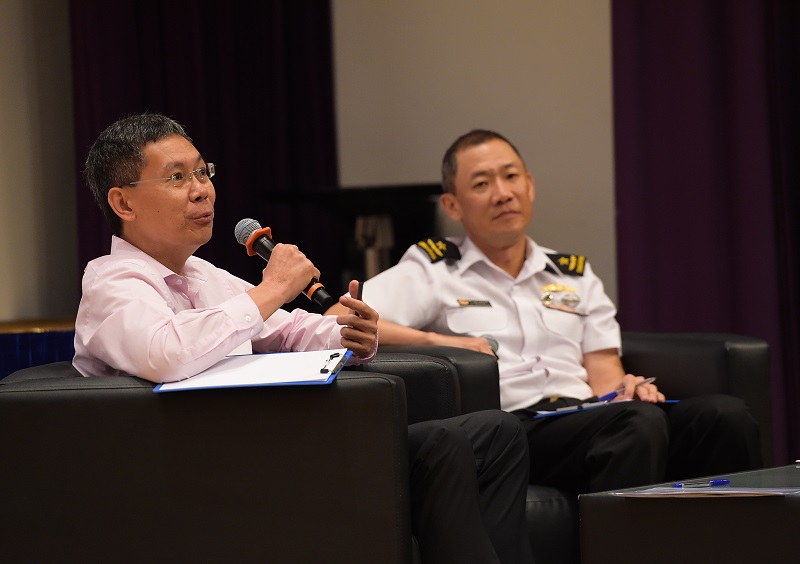
Guest speaker Rear Admiral (RADM) (Ret) Lui Tuck Yew spoke about his experience in overseeing the SAF's response to the RSS Courageous incident.
On 3 Jan 2003, patrol vessel RSS Courageous collided with cargo ship ANL Indonesia, resulting in the deaths of four Republic of Singapore Navy (RSN) servicewomen. RADM (Ret) Lui, who served as Chief of Navy then, took the lead in handling the crisis.
Speaking about his personal experience in breaking the news to the victims' relatives and addressing the grieving Navy family, RADM (Ret) Lui explained that his priority was in taking care of the people, both in-service personnel and the families of the victims. This was a role only the leader could perform, to reassure the grieving and to rally the disheartened.
"We have always prided ourselves on being a Navy family. During a situation like this is when you really show whether it is just words or whether it really means something."
Keynote presenters Eric McNulty and Richard Serino from Harvard University's National Preparedness Leadership Initiative spoke on the Meta-Leadership Framework and its real-world application.
They described their crisis management experience in the response to the Boston Marathon bombing in 2013, highlighting the complexities that came with working across multiple jurisdictions and with multiple agencies, as well as the importance of training and building trust across these agencies in times of peace.
The seminar proved to be an enriching session for the participants, which included students at the Goh Keng Swee Command and Staff College.
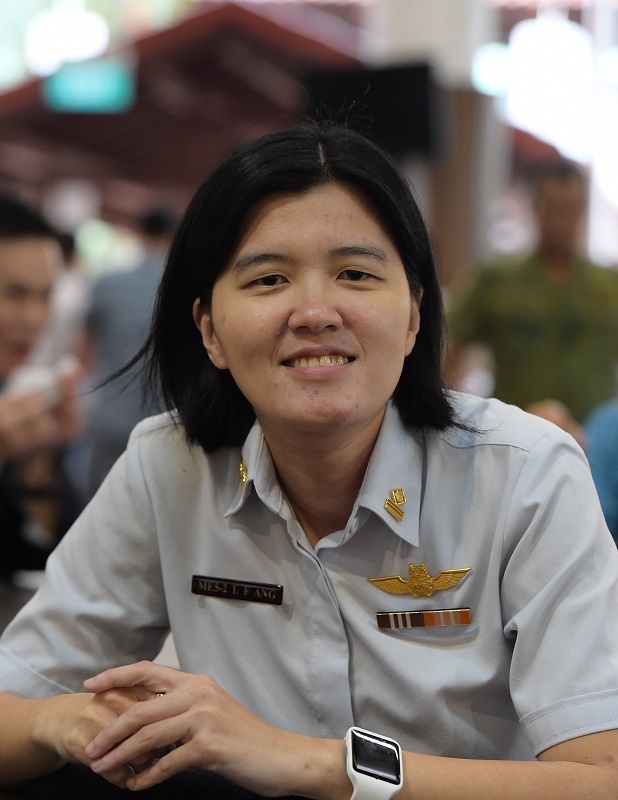
Among them was Military Expert (ME) 5 Ang Lay Fang. "The pointers and examples were relevant. We can see how the training we receive in the SAF better prepares us for wartime or crisis management," said the former Section Head of the Structures Branch at the Air Engineering and Logistics Department.
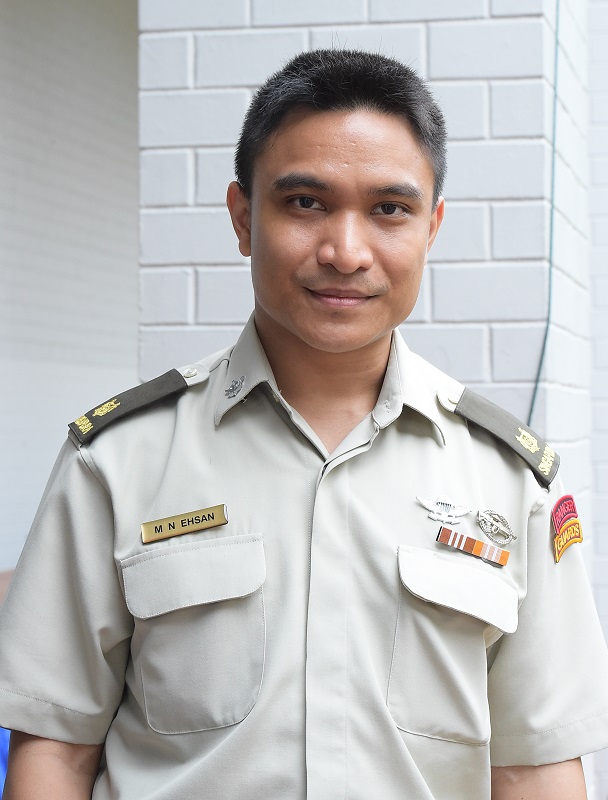
As for fellow GKS CSC student Major (MAJ) Muhammad Noor Ehsan, he enjoyed learning about the various leadership structures that can be applied to different types of crisis situations.
"One thing that I found interesting was the 'flat' leadership where there are many leaders across different agencies and they are all leaders in their own fields," said the former Staff Officer in the Army Safety Inspectorate.


ALSO READ IN TECHNOLOGY
Locked & Loaded: SAF Shooting Contingent weapons
26 Nov 2025
AI joins the fight in national cyber defence exercise
12 Nov 2025
AI and closer collaboration among agencies and industry are taking centre stage in this year’s Critical Infrastructure Defence Exercise (CIDeX).
They built this city
01 Oct 2025
Turning vision to reality: the team behind SAFTI City clinches the Defence Technology Prize 2025 Team (Engineering) Award!