
TECHNOLOGY
ALL SYSTEMS GO FOR 1 MEDICAL SQUADRON
02 Dec 2008
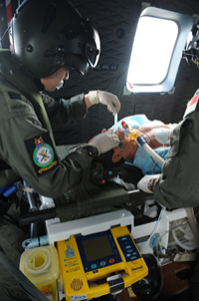
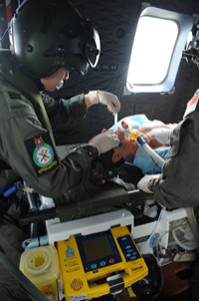
In this age of advanced medical science and technology, casualties in both peacetime and during hostile operations can be kept to a minimum. This decrease in mortality is aided by the use of air assets such as helicopters and application of damage control surgery in the field - in a combined attempt to lengthen the "golden hour" of survivability for casualties.
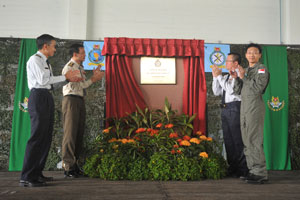
This was the view expressed by Chief of Defence Force, Lieutenant-General (LG) Desmond Kuek, at the 1 Medical Squadron's (1MS) Full Operational Capability (FOC) Declaration Ceremony on 24 Nov.
It was a significant milestone for the men of 1MS, as they were officially recognised for their commitment and ability in helping to improve the survivability of casualties.
"It's something all our men can be proud of, because everyone contributed to bring 1MS to where it is today," said 1MS Commanding Officer, MAJ (Dr) Marcus Tan, who also paid tribute to his predecessors, the forerunners in their quest toward FOC.
1MS has certainly come a long way since they first started out as a medical centre in 1971.
In January this year, the squadron was assessed on their training programme and their ability to carry out HEliborne Medical Evacuation (HEME) operations in both day and night conditions, which they passed with excellent results.
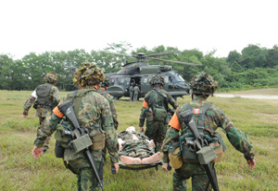
A HEME operation is one that involves the air evacuation of injured servicemen from the frontline of battle to a tertiary hospital for definitive surgery.
Personnel from the Army Medical Services (AMS) first perform damage control surgery on casualties in the field, before they are handed over to the 1MS crew, who will then ferry them to hospitals via helicopters.
Such an operation sees the seamless cooperation between the AMS and 1MS.
It is a clear example of the ONE SAF integrated concept of operations, said LG Kuek, and it serves as "a reminder that this working concept is applied (and works) even for back-end support operations".
In attaining FOC, the HEME teams, comprising mainly NSmen, were complemented with state-of-the-art hardware.
The Air Mobile Life Support Unit (AMLSU) II is a sophisticated piece of medical equipment. With its acquisition and operationalisation by 1MS, the HEME teams have been able to perform ICU-type monitoring and procedures on casualties within the helicopter, while transporting them from the field to a tertiary hospital.
"We need to have a group of people with the set of skills to operationalise the AMLSU II, so both assets (hardware and software) are very important," said MAJ (Dr) Tan.
With their operations running like a "well-oiled" machine after achieving FOC, 1MS proves itself capable of tackling a wide spectrum of operations such as HEME, search-and-rescue, as well as humanitarian aid and disaster relief - being ever ready to save servicemen and civilians alike.
"SAF combatants have increased confidence in the battlefield, knowing that we are able to bring them back in a safe and timely fashion," added MAJ (Dr) Tan.
Not resting on their laurels, 1MS has plans in the pipeline to develop AMLSU III, so that more servicemen can be helped at any one time.
This commitment to caring for soldiers is an integral part of the SAF's core values.
"For servicemen who lay down their lives for the nation, the nation must be do everything possible to bring them back to safety," MAJ (Dr) Tan said with firm resolve.

ALSO READ IN TECHNOLOGY
AI joins the fight in national cyber defence exercise
12 Nov 2025
AI and closer collaboration among agencies and industry are taking centre stage in this year’s Critical Infrastructure Defence Exercise (CIDeX).
They built this city
01 Oct 2025
Turning vision to reality: the team behind SAFTI City clinches the Defence Technology Prize 2025 Team (Engineering) Award!
Operating over skies & seas
22 Aug 2025
This gear is designed to help a Sensor Supervisor survive emergencies in the air and at sea.