
DIPLOMACY
ADAPTING TO NEW SECURITY CHALLENGES AND REALITIES
30 Jun 2008
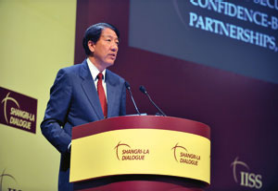
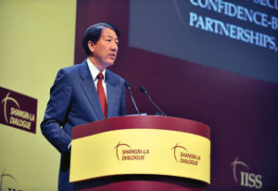
With the Asia-Pacific region facing security challenges that are multi-faceted and multi-dimensional, different modes and levels of cooperation are required to address varying security needs and geopolitical contexts.
PIONEER was at the Shangri-La Dialogue, where Minister for Defence Teo Chee Hean addressed defence ministers and officials from 27 countries.
The security challenges today now come from '360 degrees', and many of them are also transnational in nature and require multilateral cooperation, said Mr Teo (right) during his plenary speech on 1 Jun.
"Issues such as energy security, food and water security affect us all. Other examples of these new '360 degrees' security challenges include maritime security, pandemics, non-proliferation, terrorism and humanitarian assistance and disaster relief."
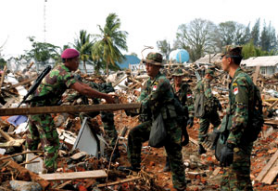
The debilitating effects of such non-traditional security concerns were brought to the fore with the devastation caused by Cyclone Nargis in southern Myanmar and the earthquake in Sichuan province of China.
Conveying his condolences to the people of Myanmar and China, Mr Teo said such disasters were "sobering reminders" of the importance of practical international cooperation in areas such as humanitarian assistance and disaster relief (HADR).
"No country, no matter how big, is able to muster all the resources and specialised capabilities necessary to attend to all the needs of the victims," he said.
"International aid organisations and rescue services from other countries can bring much needed assistance."
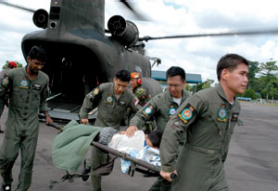
Mr Teo added that the armed forces had a crucial "quick response role" to play in HADR efforts. With their highly operational resources and manpower, they can transport aid to where it is needed most in the affected locality and help in its distribution.
Guiding principles for HADR
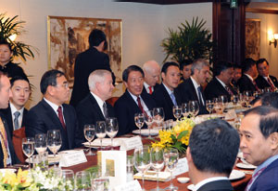
During a private luncheon hosted by Mr Teo on 31 May for the visiting ministers and ministerial representatives, one of the key issues discussed was ways to enhance the region's ability to respond to, and provide, relief in the wake of natural disasters.
The ministers agreed that multilateral cooperation in HADR could be guided by three broad principles:
- Firstly, the affected country has the primary responsibility to respond to disasters occurring within its territory in a prompt and effective manner.
- Secondly, where needed, the affected country shall facilitate external assistance from other countries and international organisations in its HADR efforts, to achieve the objective of prompt and effective disaster management and relief.
- Lastly, external assistance shall be provided with the consent of the affected country, and the HADR efforts should be under its overall control and supervision.
Going forward, Mr Teo said there was a need to "build capacities to accommodate different modes of cooperation between different configurations of countries".
Building ties and interoperability
Through confidence-building measures and practical cooperation, countries can establish trust and understanding, identify and address common security challenges, and be ready to cooperate in times of crises, even in non-traditional configurations, if the situation calls for it.
The issues of energy, food and water security, for example, if not properly handled, can easily become "zero-sum flash-points for conflict between nations", said Mr Teo.
But if we can find creative ways to break out of this mould, we can maintain peace and build better lives for our peoples. Instead of competing over water, or food or energy, we can increase our collective security by cooperating to harness alternative energy sources and increase food supply."
The Asia-Pacific security architecture is still evolving, Mr Teo pointed out. A matrix of overlapping structures - comprising broad multilateral groupings, focused regional or task oriented groupings, and bilateral relations - is emerging as a result of it.
Each layer serves a purpose and facilitates progress and development of the other layers, strengthening the overall security architecture and helping it to move forward.
Over the years, the Shangri-La Dialogue has facilitated discussions on specific issues, such as maritime security in the Malacca Strait, leading to a consensus over a set of common principles and the "Eyes in the Sky" initiative for combined maritime air patrols.
Looking to a new dawn
Mr Teo concluded that the agenda in the coming years would be to continue working towards an open and inclusive security architecture that can accommodate different modes of security cooperation, while devising innovative strategies and implementing practical cooperation to tackle the new and diverse challenges.
Organised by the International Institute for Strategic Studies, the Shangri-La Dialogue brings together defence ministers from the Asia-Pacific region for discussions on regional security issues and defence cooperation.
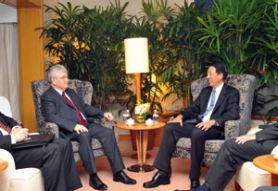
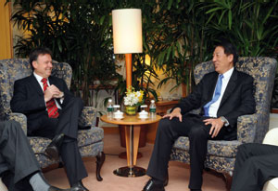
Over the course of the three-day dialogue, Mr Teo met defence ministers and officials from 24 countries.
They included the Australian Minister for Defence Joel Fitzgibbon, Malaysian Deputy Prime Minister and Minister of Defence Dato' Sri Najib Tun Razak, the United Kingdom's Secretary of State for Defence Des Browne, and the United States Secretary of Defence Robert Gates.
Malaysian Deputy Prime Minister and Minister of Defence Dato' Sri Najib Tun Razak (right) calling on Mr Teo.

ALSO READ IN DIPLOMACY
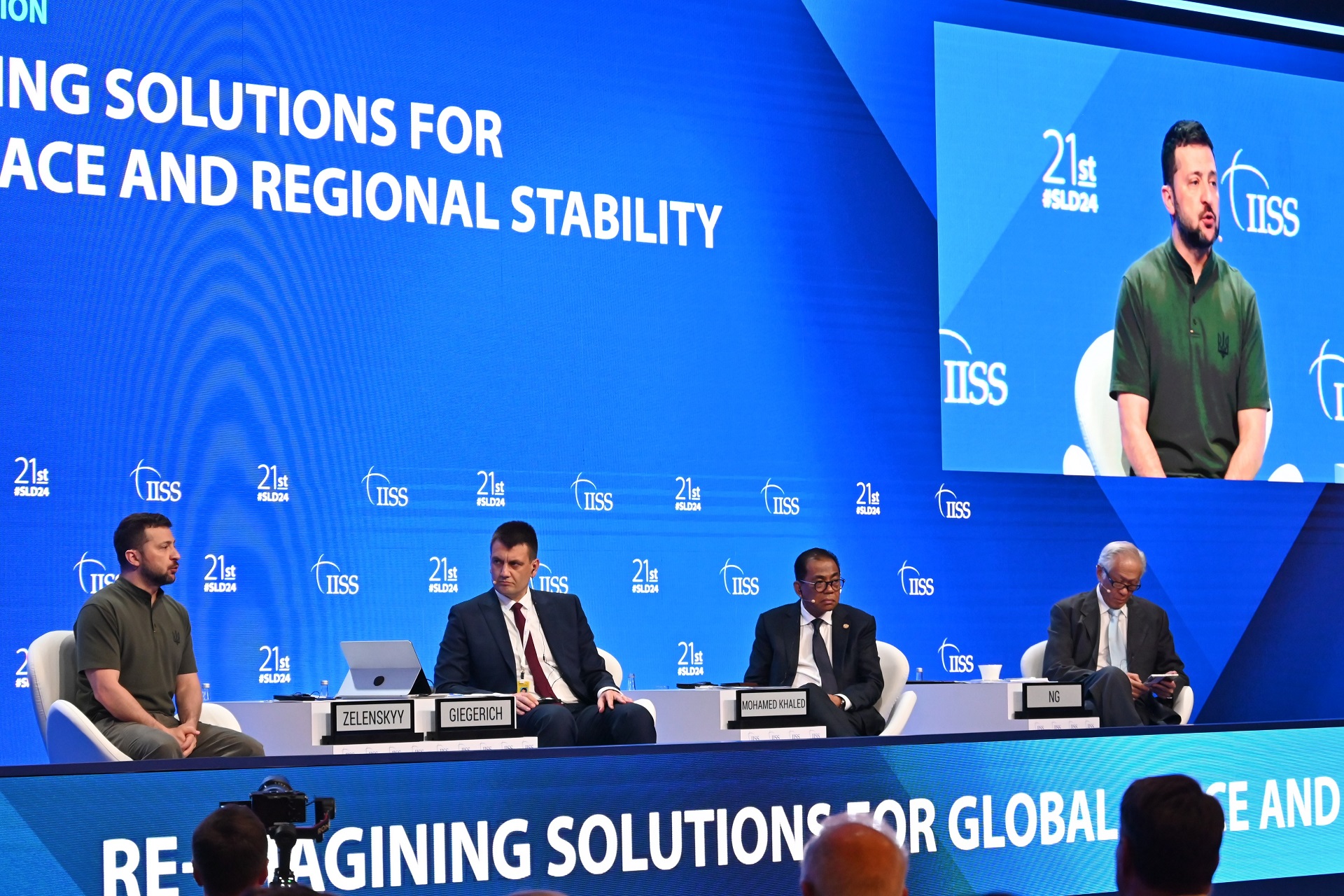
A call for peace at Shangri La Dialogue
02 Jun 2024
A repeated call for peace, especially in Asia. This was Minister for Defence Dr Ng Eng Hen's central message at the 21st Shangri La Dialogue (SLD), held from 31 May to 2 Jun.
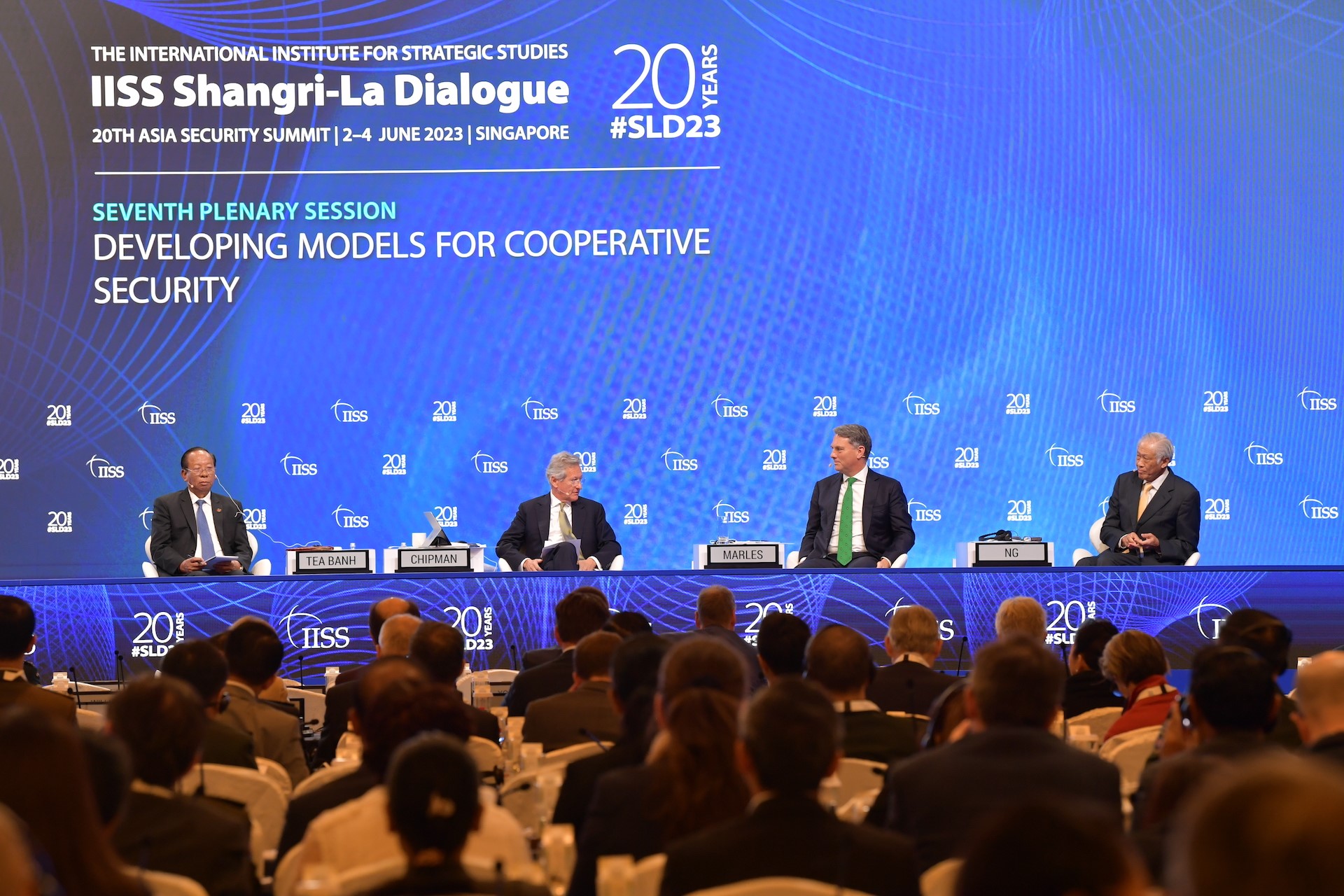
Shangri-La Dialogue sees frank discussion of security issues
04 Jun 2023
The 20th Shangri-La Dialogue, held from 2 to 4 Jun, saw ministers from around the world meet in Singapore to discuss key defence and security issues.
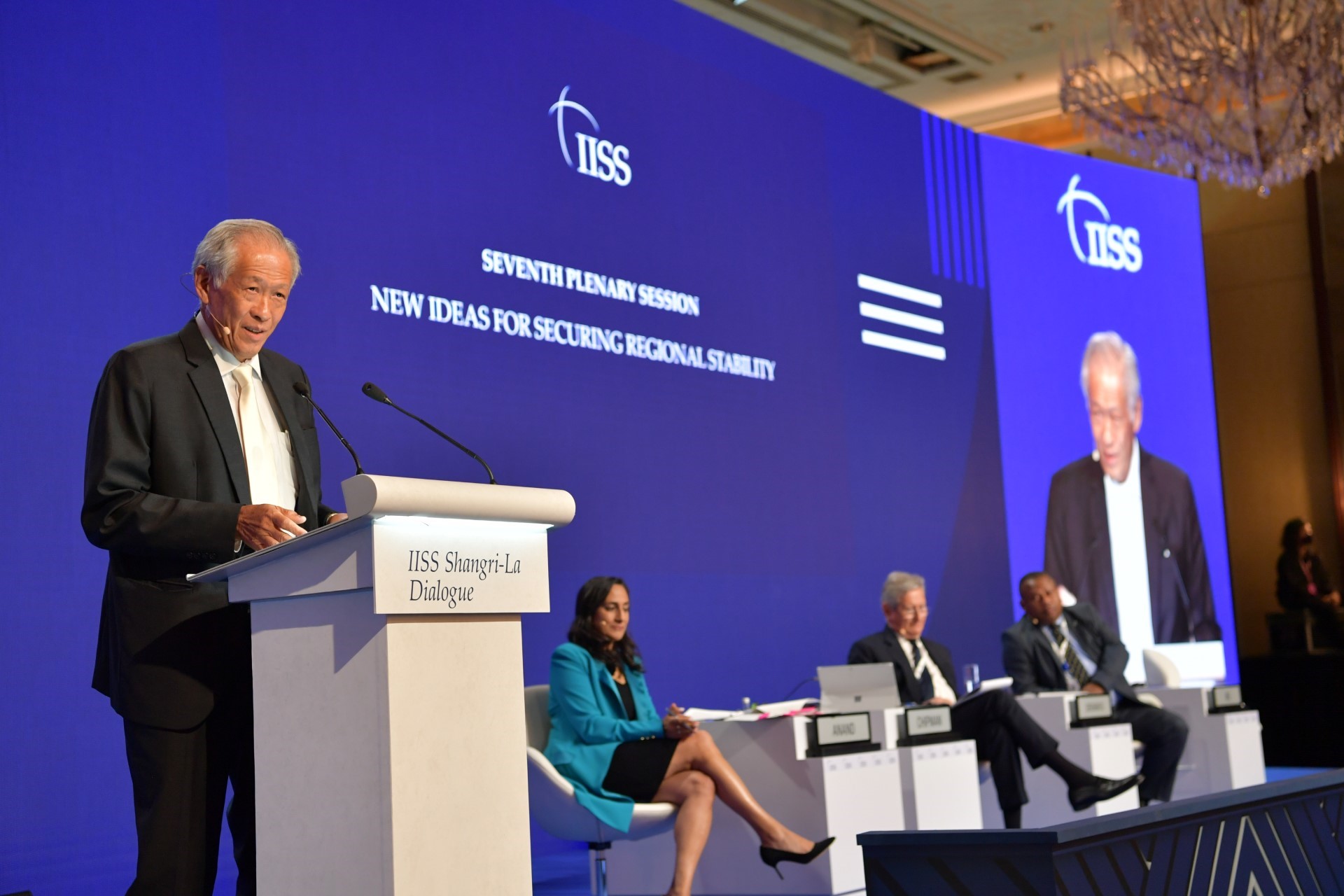
SLD remains valuable platform for crucial discussions: Dr Ng
12 Jun 2022
Minister for Defence Dr Ng Eng Hen spoke on the US-China relationship, the importance of a rules-based order and the role of ASEAN as a regional security platform at the 19th Shangri-La Dialogue (SLD).