
PEOPLE
Paw-tners in service
24 Aug 2026
This International Dog Day, we meet four canine-and-handler duos to find out what goes on behind the scenes in the SAF's Military Working Dog Unit.
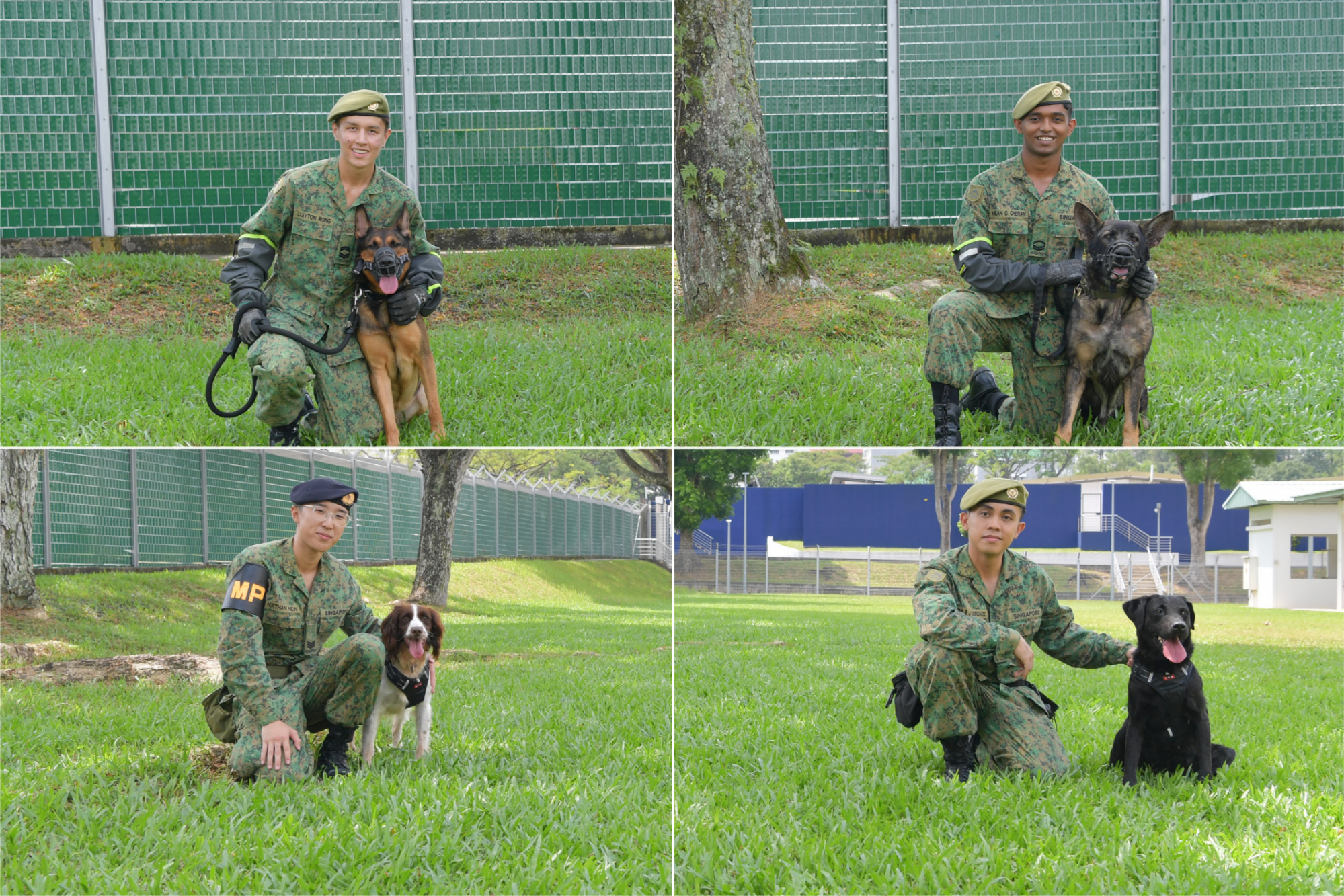
Their daily grind centres on building trust with partners with four legs and minds of their own. Welcome to the Singapore Armed Forces Military Working Dog Unit (SAF MWDU).
Trading traditional weapon maintenance for grooming, kennel cleaning, and behavioural conditioning, these Full-time National Serviceman (NSF) handlers face a whole different set of challenges in their role.
Learning to take the lead
While some handlers grew up with pets, others stepped into the kennels with zero experience taking care of animals.
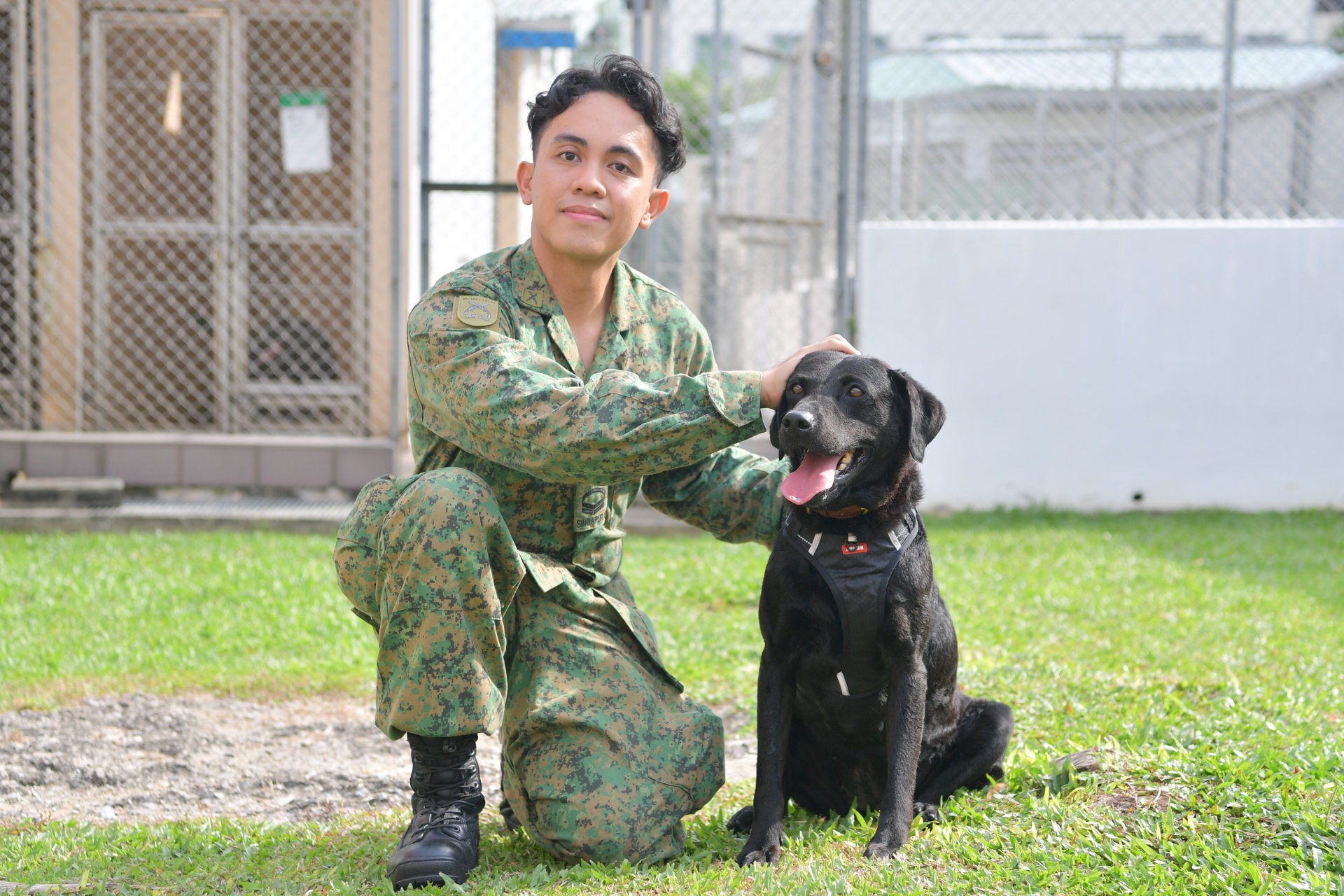
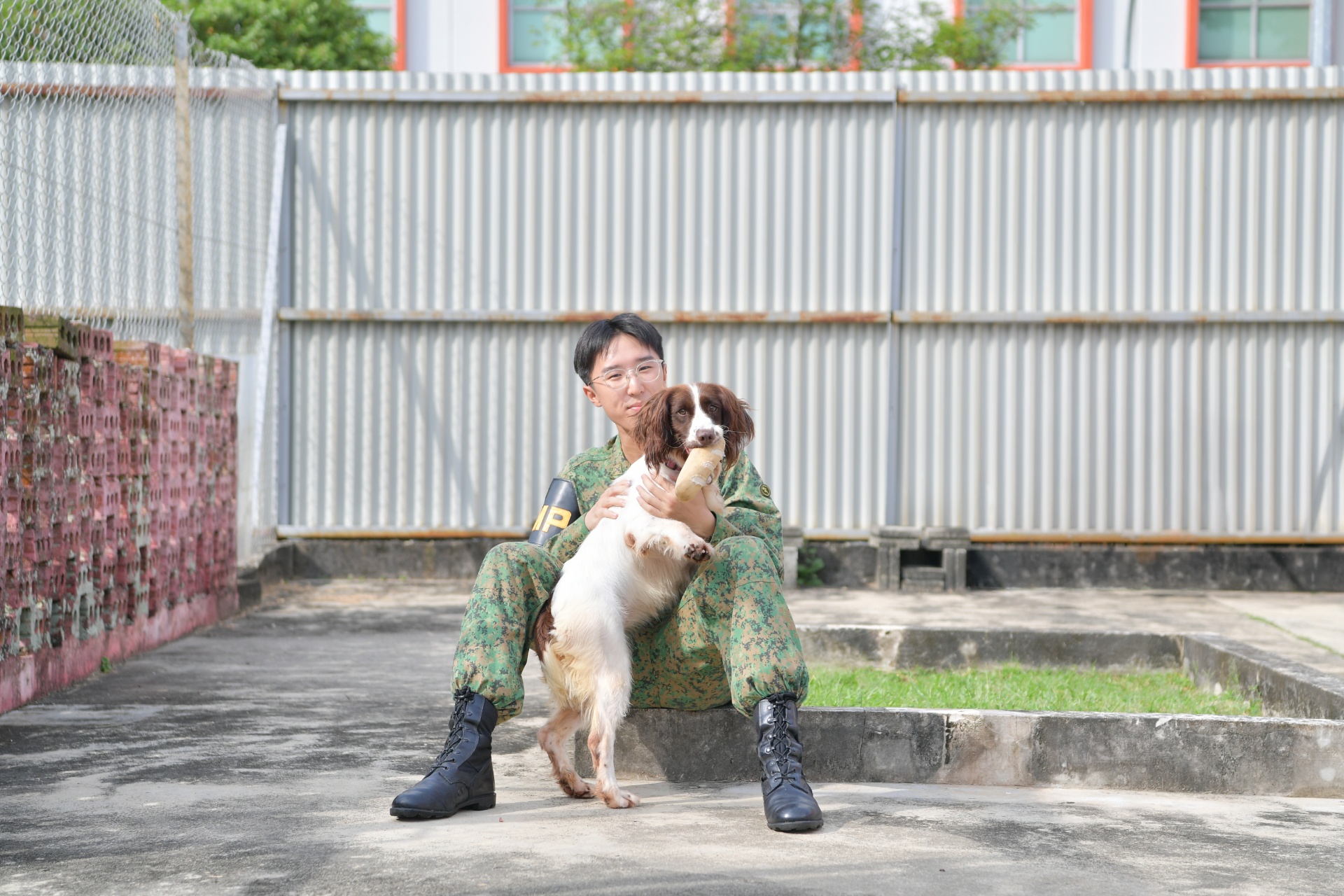
Corporal (CPL) Apao Russel James Gonzalez, a 25-year-old handler who takes care of sniffer dog Belle, now says he can’t imagine being without a canine companion.
"I’ve never handled a dog before, so I thought it’d be something interesting and exciting... After going through this experience in MWDU, I see myself having dogs in the future!"
The matching process is designed to ensure compatibility. Handlers are paired with dogs based on their temperament, energy levels, and personal strengths.
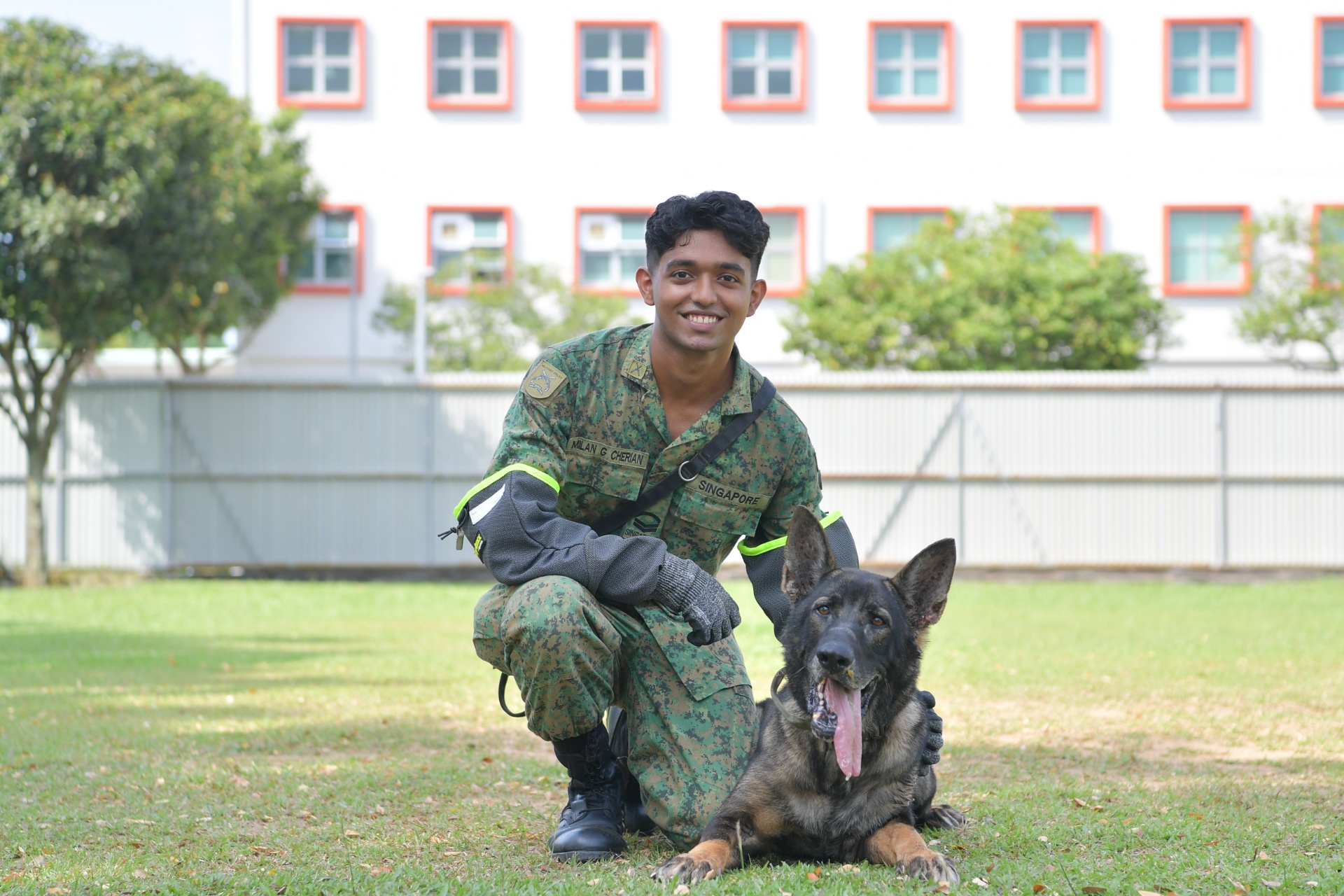
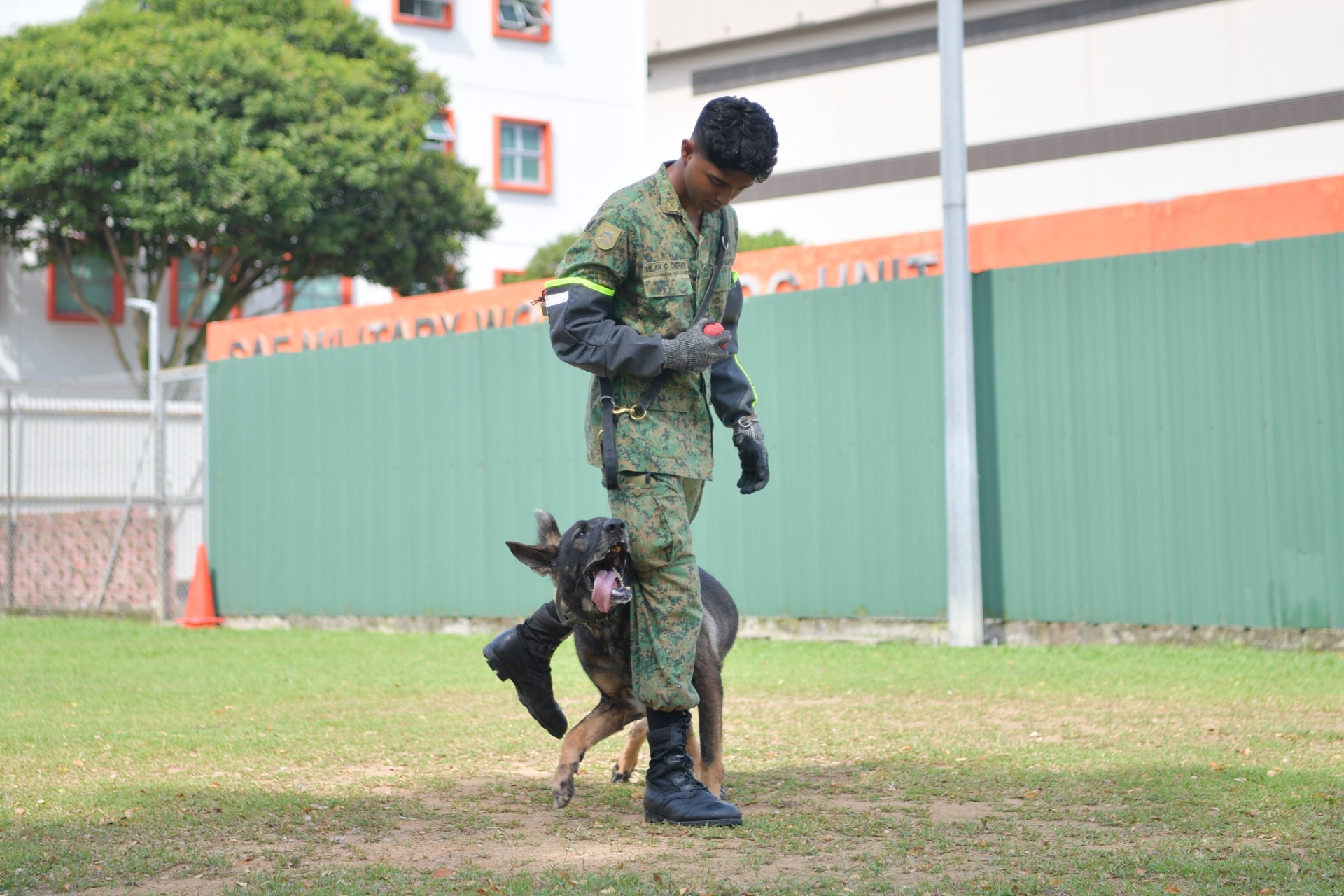
For 22-year-old CPL Milan G Cherian, working with Nitro – an 8-year-old German Shepherd who works as a protection dog – required patience from Day One.
"Nitro is considered a 'one-man dog'... He's a very impressionable dog and needs someone patient enough to deal with his tantrums and tire him out every day. Otherwise, all that unexpended energy turns into pure chaos!"
There is no secret trick to building mutual trust – it often begins with simple exercises like “fetch” and positive reinforcement.
“When I first met Nitro, we did a trust-building exercise where I gave him the ball and asked him to return it to me. When he finally gave the ball back, I returned it to show him he could trust me," said CPL Milan.
It’s not all play time
According to the handlers, a common public misconception is that they simply play with dogs all day.
In reality, their work demands rigorous discipline, structured training and hygiene routines.
“There's also a lot of time and effort spent behind the scenes to train the dogs and prepare them for operational duties,” said 3rd Sergeant (3SG) Nathan New, 20.
The Section Commander from Headquarters MWDU added: “Unlike most units in the SAF where they train with weapons, we train with dogs — and you have to take many variables into account, like their mood or distractions."
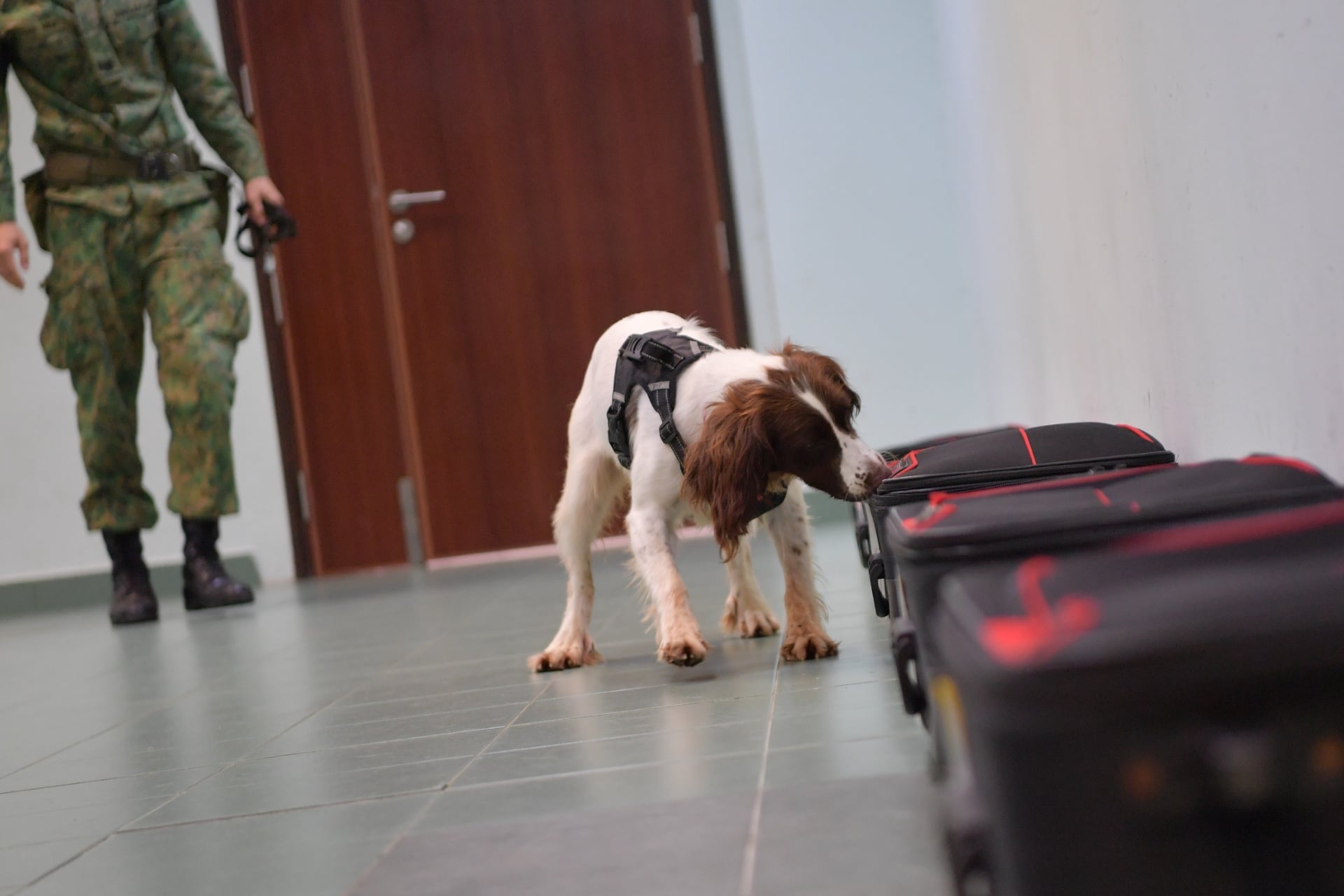
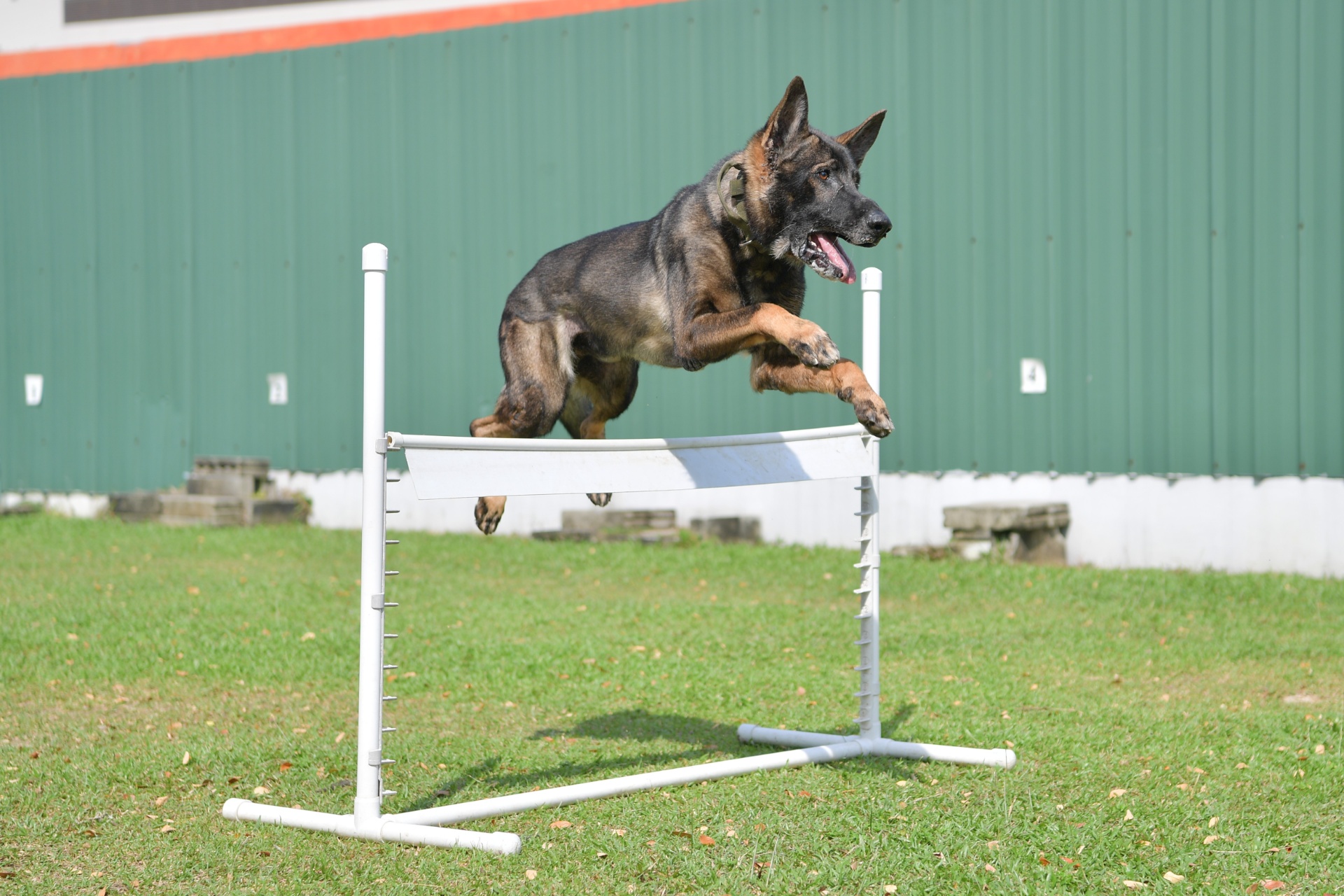
Their daily responsibilities range from routine care, such as kennel washing, grooming, and monitoring the dogs’ weight and temperature, to specialised field training.
Sniffer dogs, for instance, practise detecting specific scents, while protection and security enforcement dogs undergo training to develop the obedience, discipline and behavioural skills required for their duties.
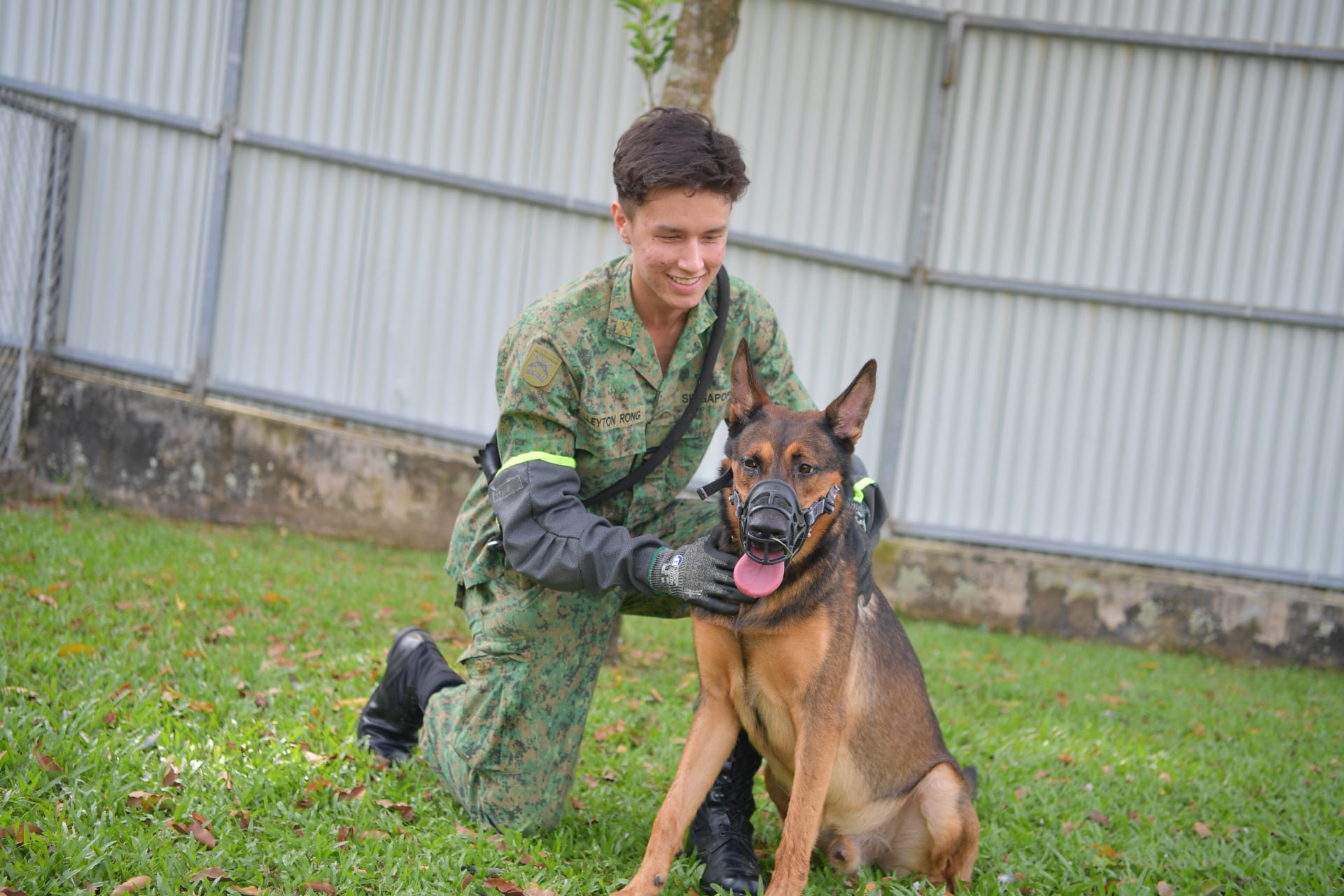
Corporal First Class (CFC) Lleyton Woodward Rong-Zhi, 20, looks after Chance, a 3-year-old German Shepherd-Malinois mixed breed.
A dog handler in the Security Enforcement Dog Platoon, CFC Woodward highlighted the dynamic nature of their work: “Handling Chance is like handling a different dog every day. You never know how he's going to behave when he wakes up, whether he's ‘in the mood’ or not.
“When they get moody, sometimes we can see them becoming disengaged from the training. In that case, we will either shorten the session or just pause it (and continue another time).”
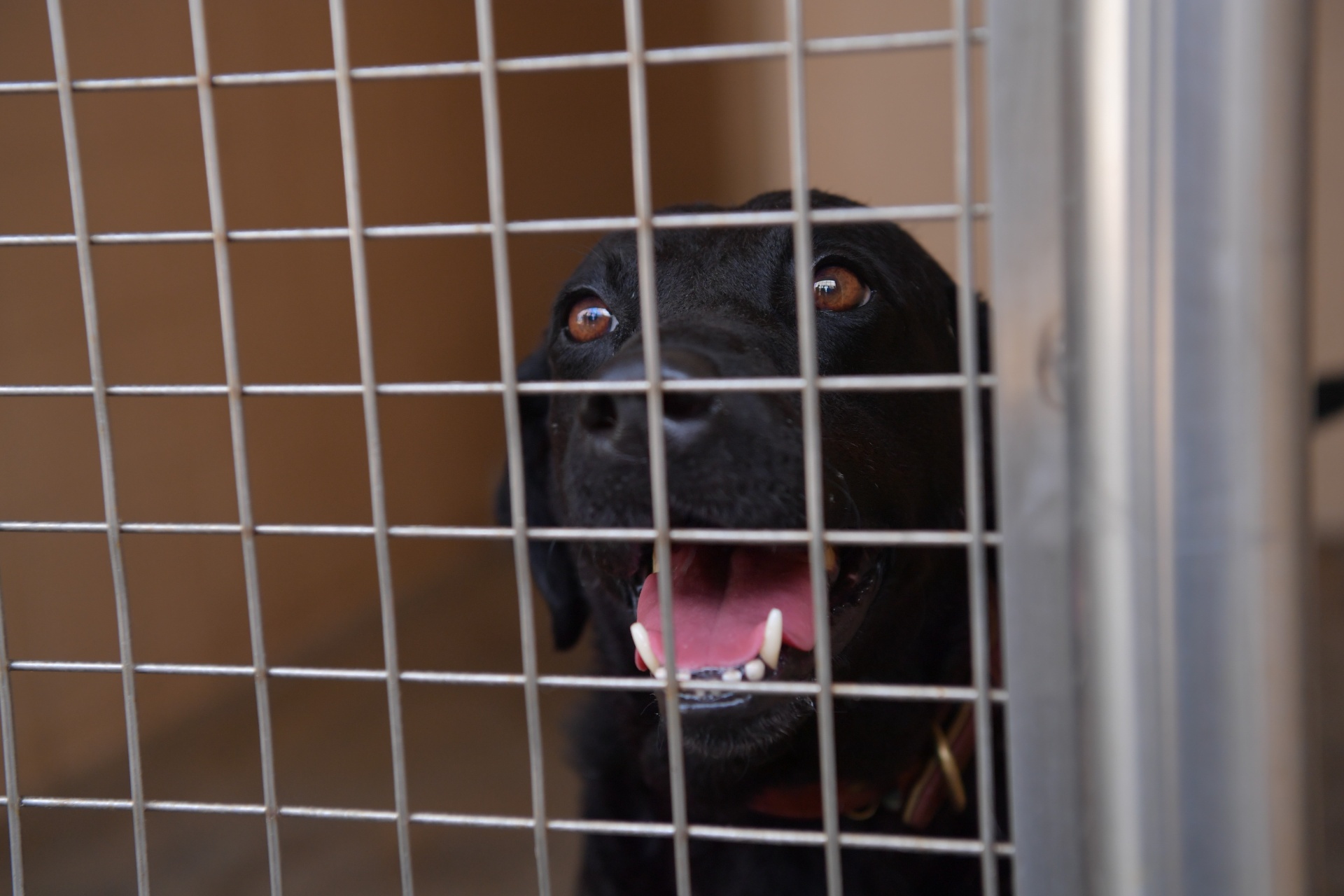
Deciphering their partner’s quirks
Spending countless hours together during shifts allows handlers to pick up on the subtle, endearing quirks that define each dog's distinct personality.
Far from being robotic military assets, these dogs possess individual temperaments that their handlers must navigate every day.
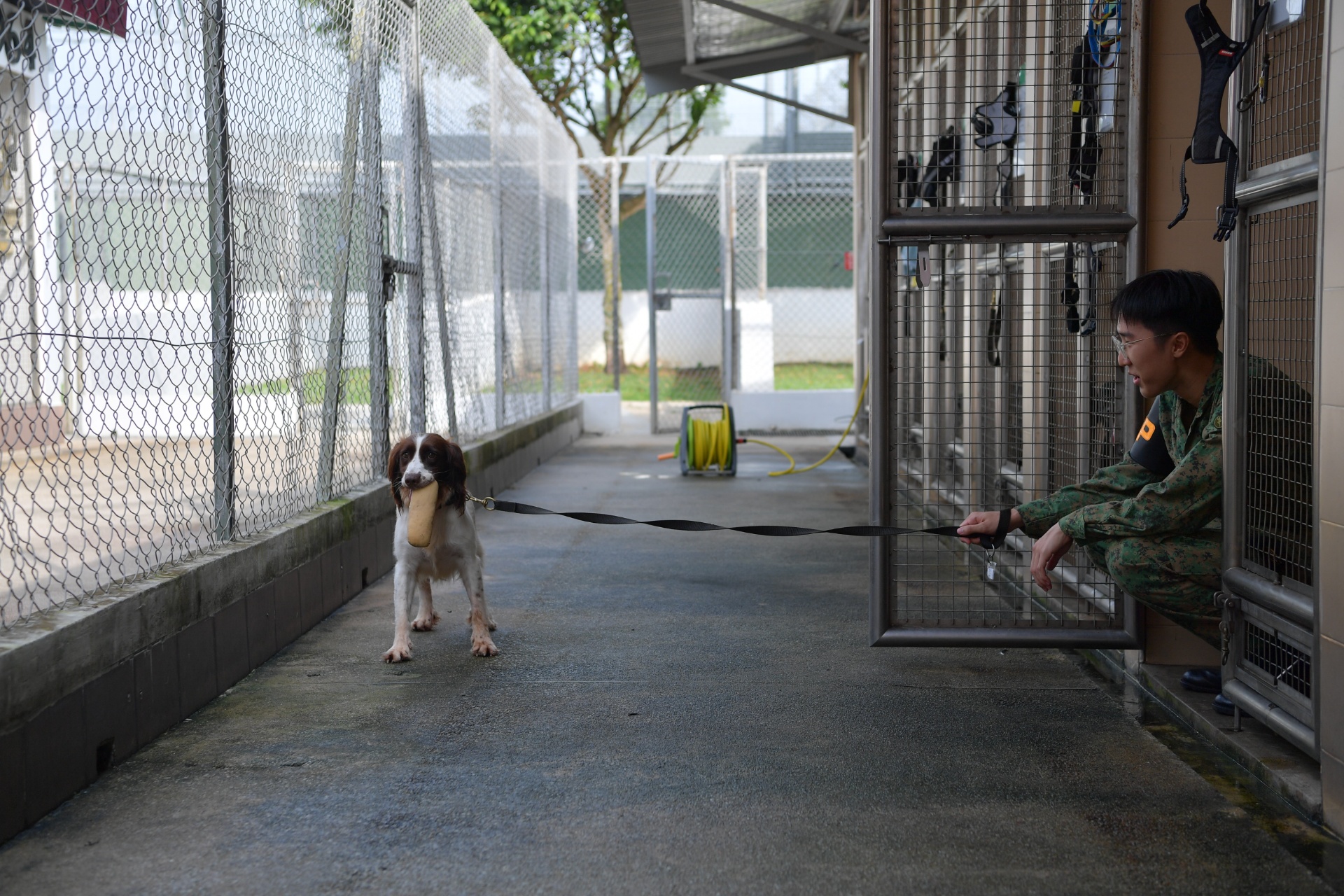
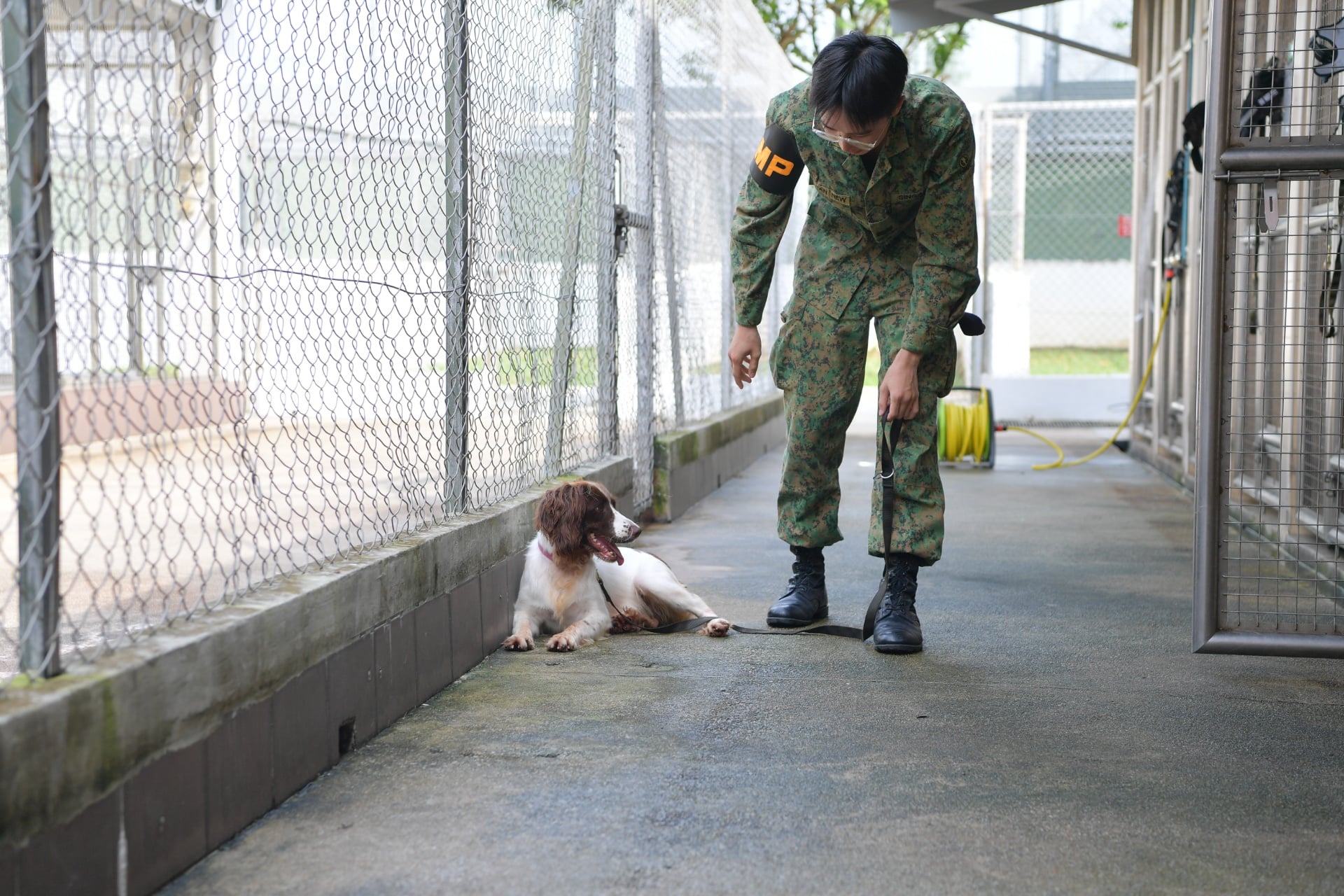
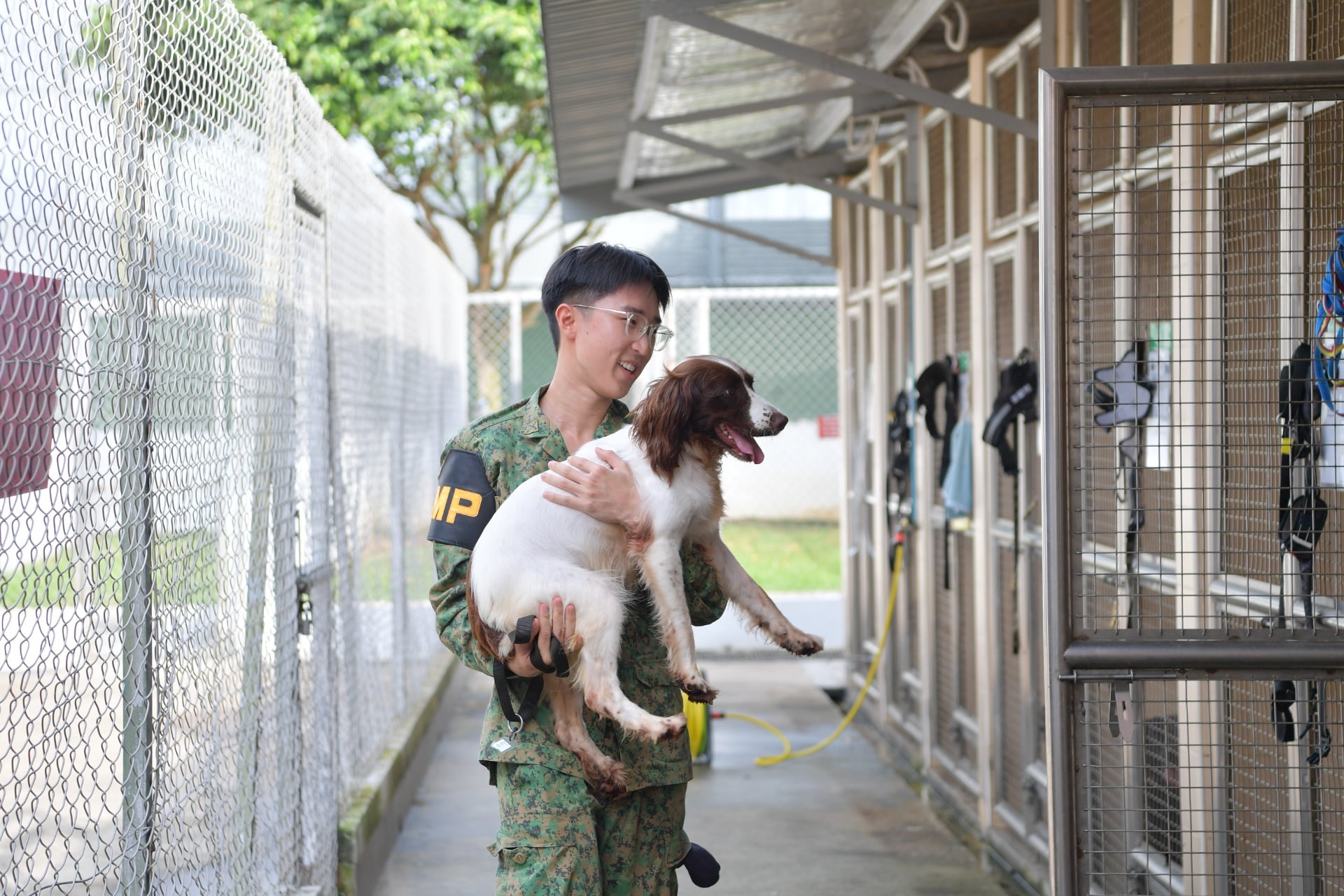
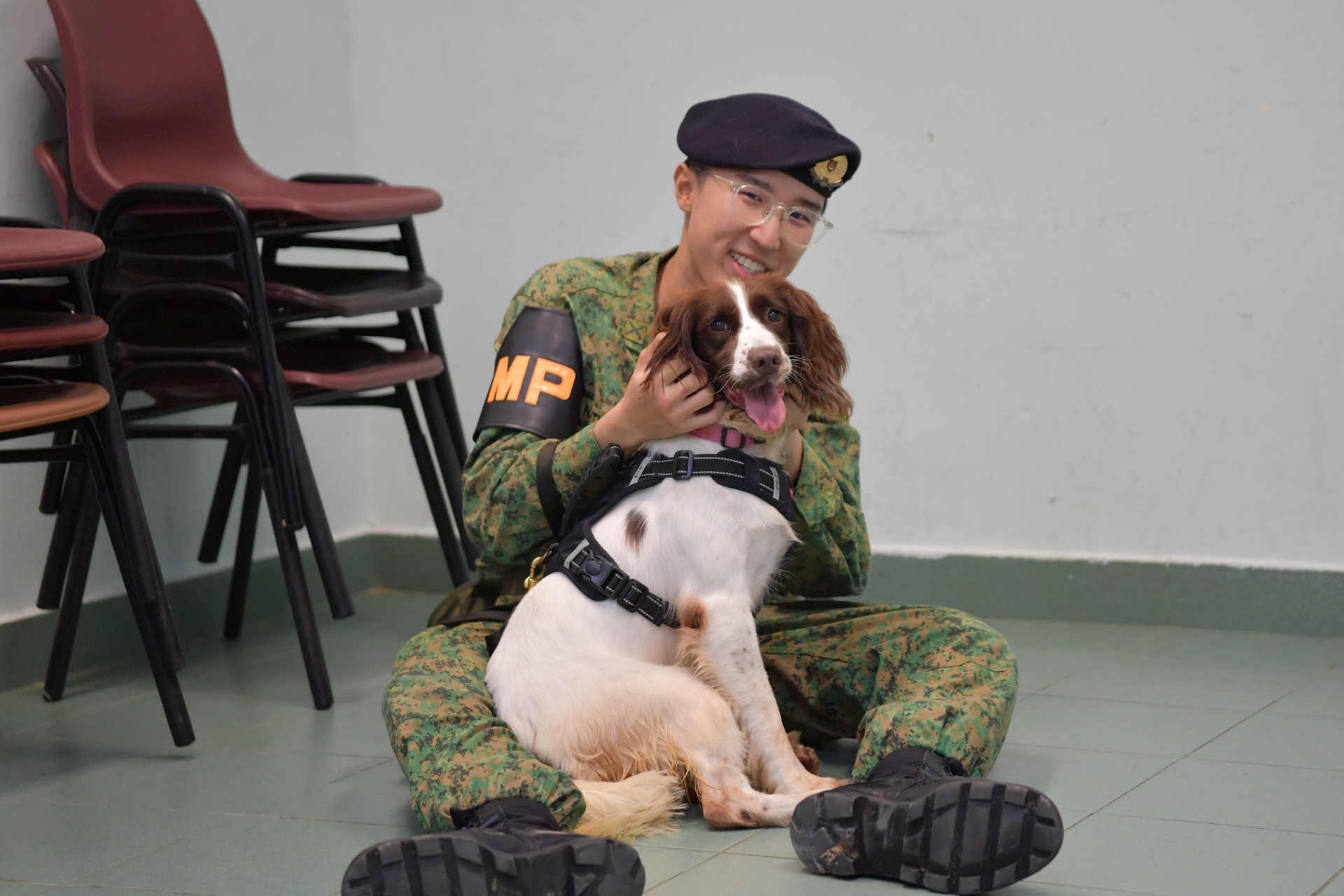
For instance, Pip’s stubborn side emerges when play time ends – the spaniel will often sit down in “protest” and refuse to enter her kennel, shared 3SG New with a smile.
“In the end, I have to either carry her or bait her back into the kennel by throwing her favourite toy inside.”
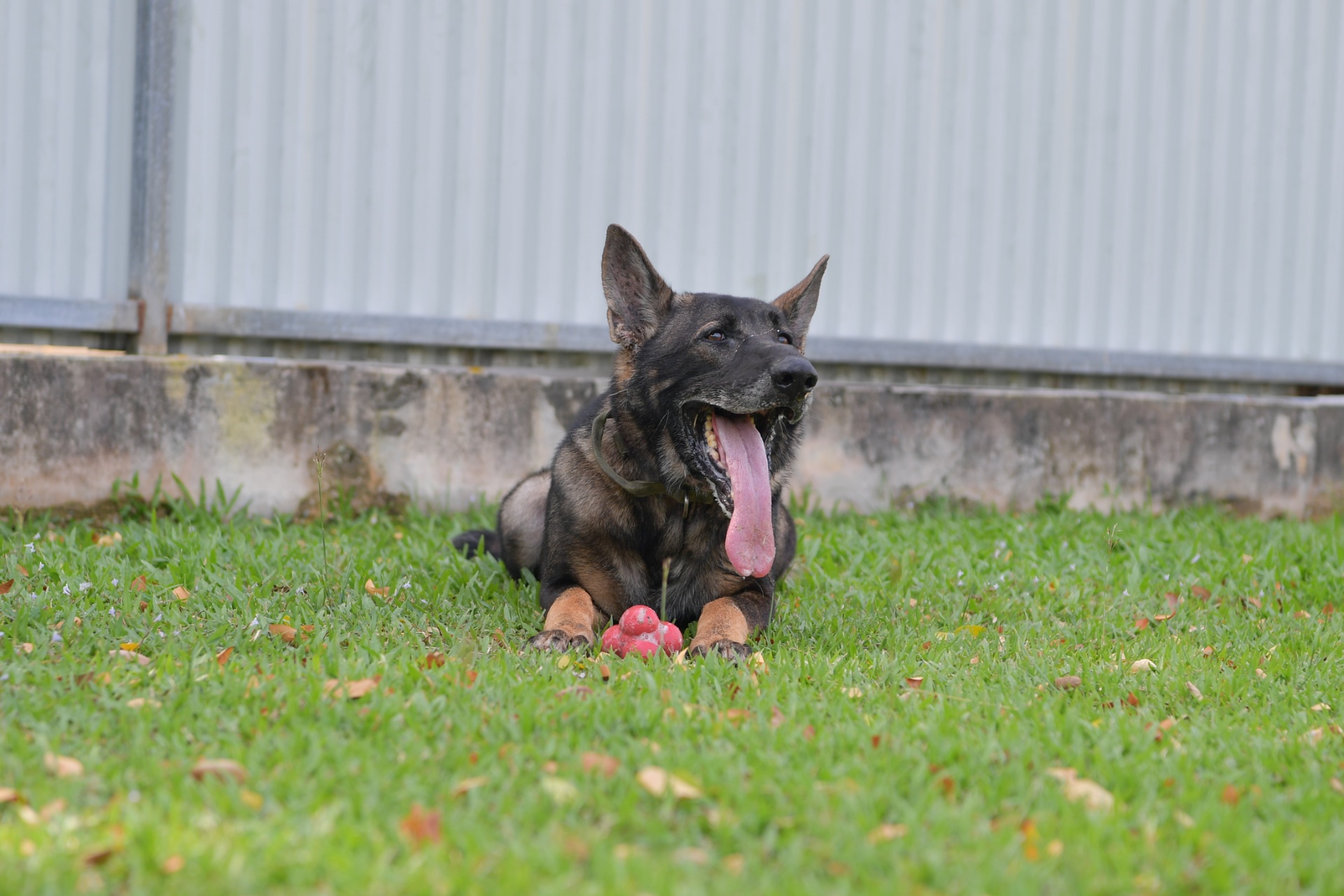
Nitro, on the other hand, has a clever “ritual” after intense training sessions, said CPL Milan.
The German Shepherd drops his favorite ball directly into his water bowl before drinking — an ingenious way to keep an eye on his prize while quenching his thirst.
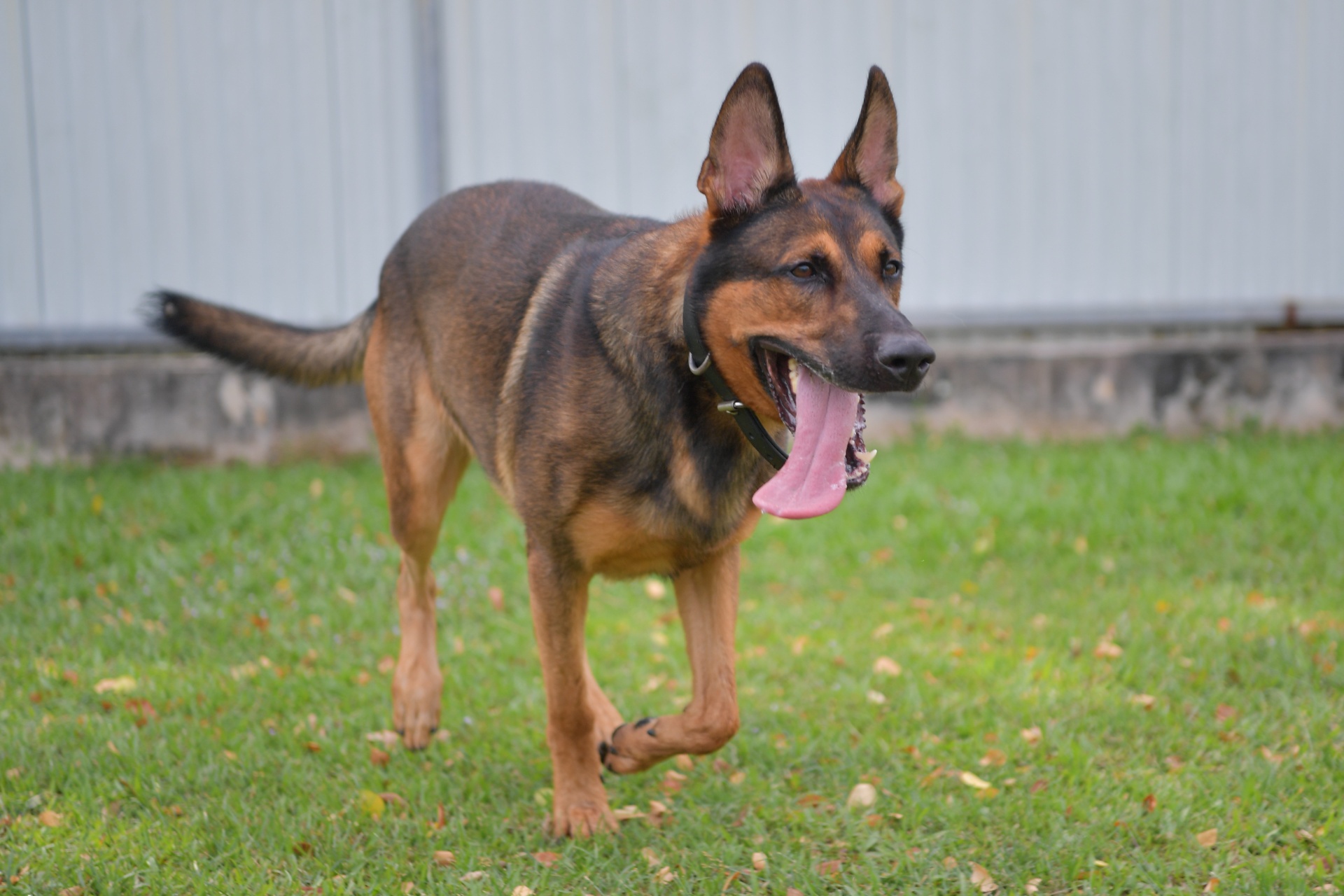
CFC Woodward shared that his dog, Chance, communicates almost entirely through expressive ear movements, flicking them around to signal what he is thinking.
Over time, he learned to read these ear movements perfectly, creating an intuitive line of communication where both handler and dog understand each other's intent without a word.
Passing the leash on
As their ORD (Operationally Ready Date) draws near, these young men inevitably face the reality of handing over their four-legged partners to the next generation of servicemen.
While it is difficult to leave behind a partner who relies on them daily, the handlers focus on setting up the next NSF handler for success.
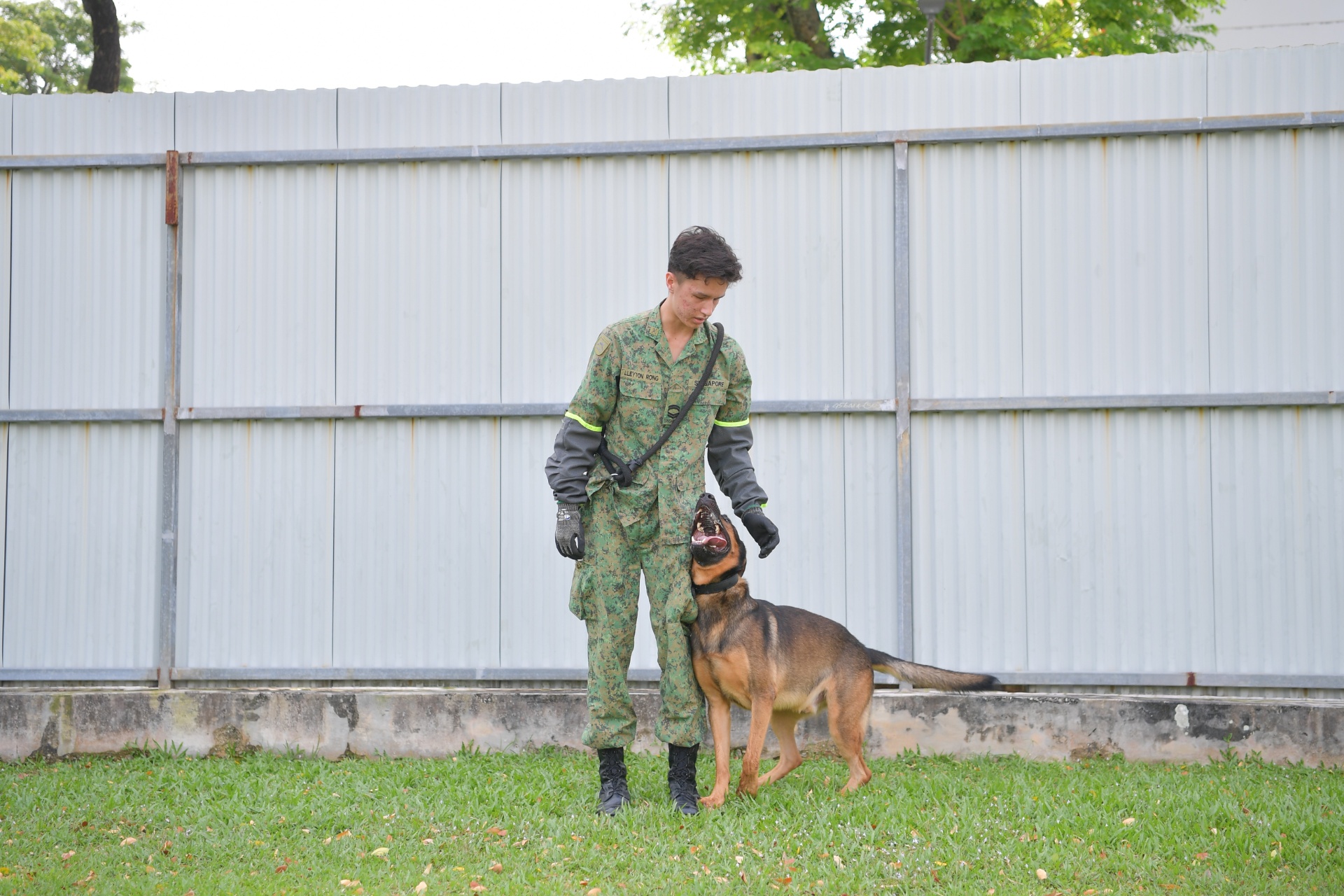
"It’s definitely bittersweet. You spend almost every day together, building a really strong bond over time, and then one day it ends. But I’d rather have experienced that than not have met my dog at all," said CPL Milan.
For CFC Woodward, he already knows where he hopes Chance will spend his retirement.
“Chance is definitely worth the wait, and I'll be waiting for the day I receive the phone call when he's ready for a new home after he retires."

ALSO READ IN PEOPLE
Brewing up the perfect blend for a hit comedy
09 Sep 2026
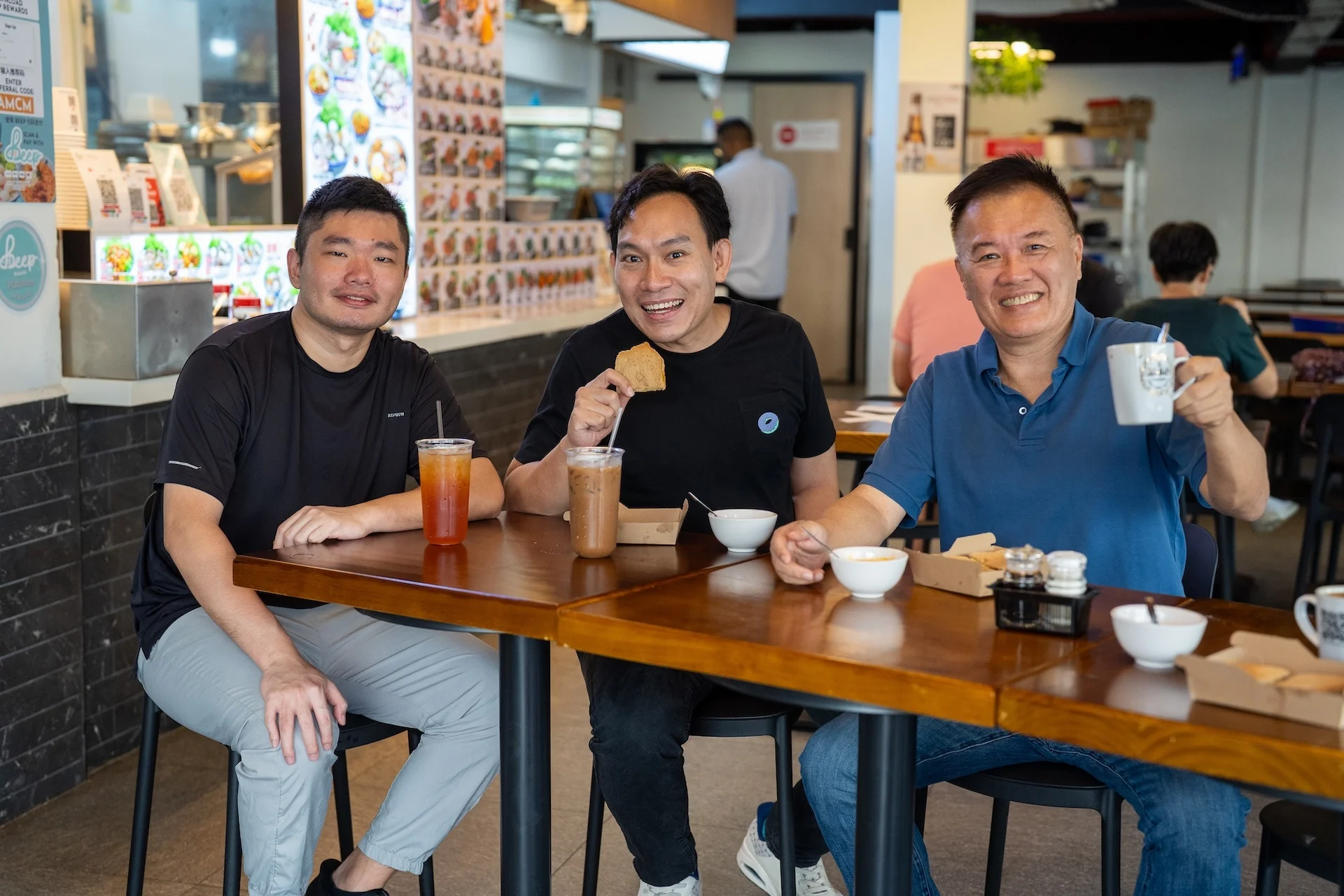
The cast of microdrama Hard Mode are bringing Singapore life to the world with a simple question: “Do you want your iced yuan yang hot or cold?”
Stepping up for the place he calls home
02 Sep 2026
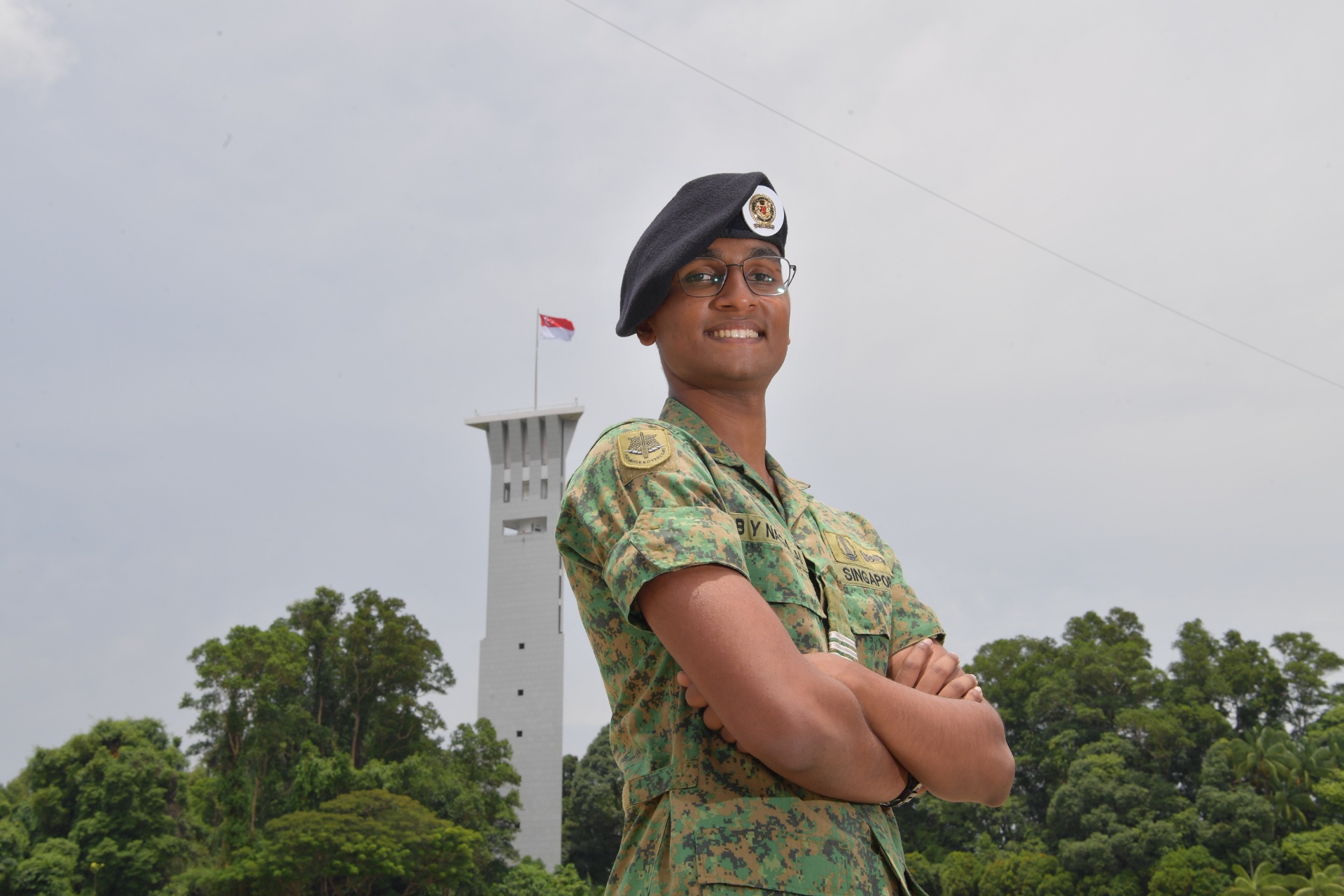
From getting his pink IC in early 2024 to becoming an NSF of the Year and embarking on a career in the SAF, OCT Bandaru Yashwanth Naga Sai didn't just find his place in Singapore, he found his calling.
Finding their stride in NS
20 Aug 2026
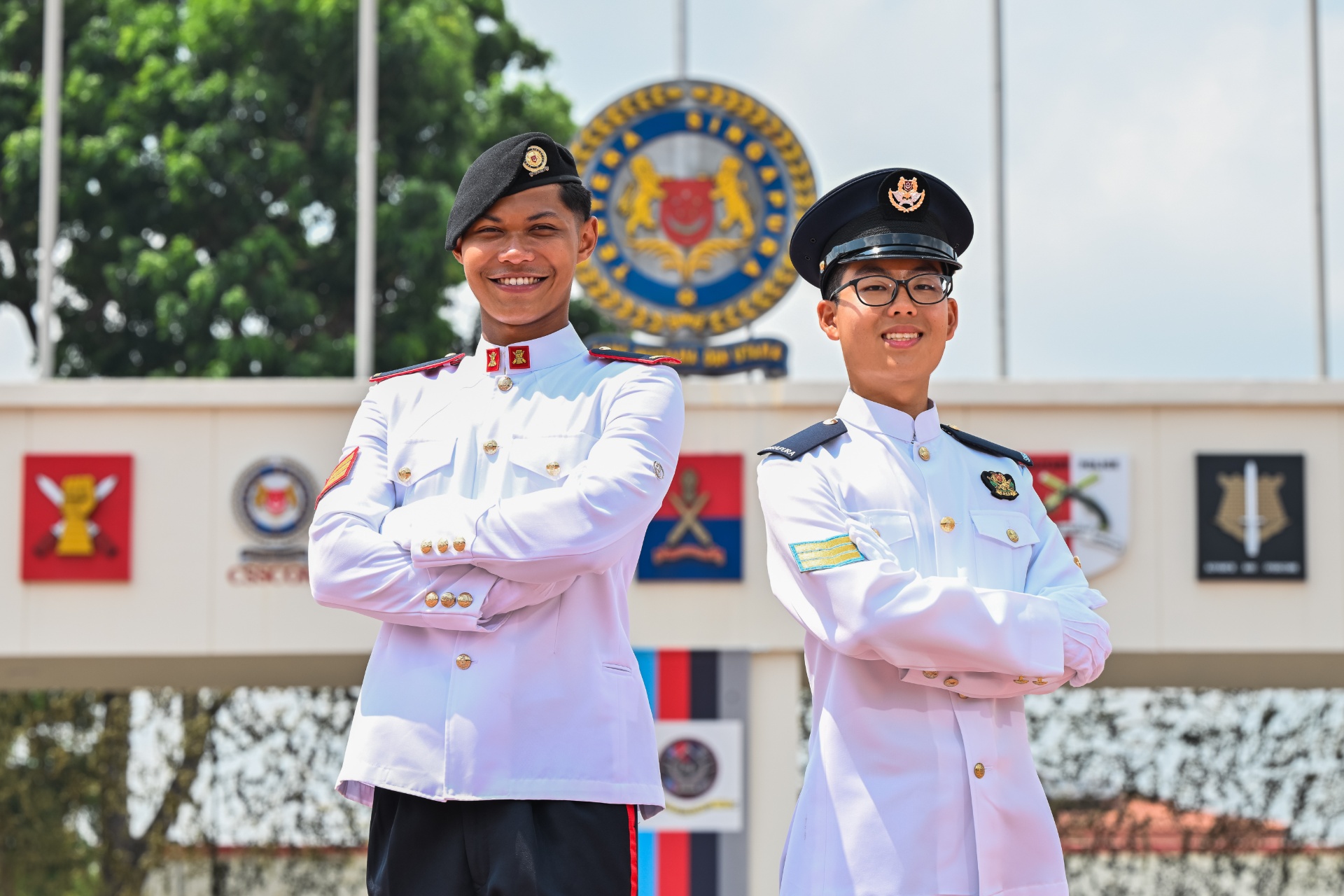
One was an athlete who had lost his drive. The other enlisted with near-zero fitness. They come from different starting points, but now carry the same conviction to lead and inspire others as sergeants in the SAF.