
OPS & TRAINING
LEAVE A BETTER S'PORE THAN THE ONE THAT YOU INHERITED, DR NG
25 Feb 2015
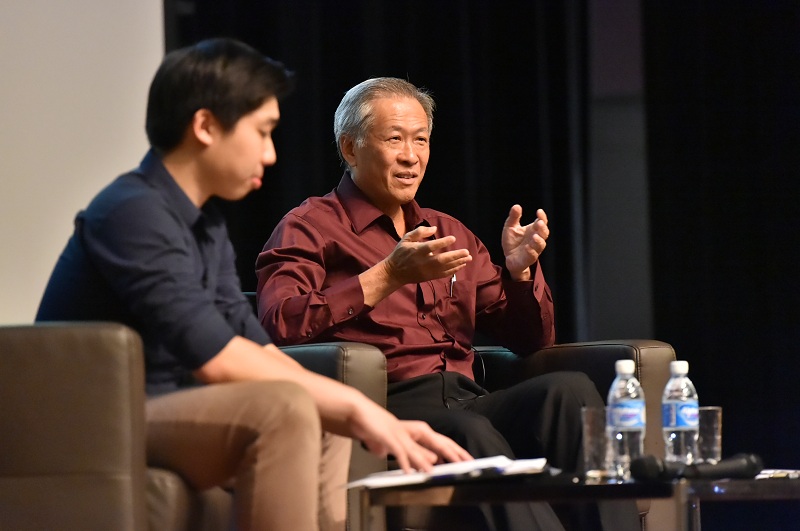
"For Singapore, our pioneer generation left us, by their words, their deeds and their sacrifices, a very strong and resilient legacy to follow - which is that every generation must hand to the next generation a more united, harmonious, progressive society.
"If we keep to this example set by our pioneers to leave a better Singapore than the one that you inherited, then each generation can look forward to the next, expecting a better Singapore," said Defence Minister Dr Ng Eng Hen on the need for future leaders to continue the good work of our pioneers.
On Singapore's and the Singapore Armed Forces' (SAF's) humble beginnings, he said: "We were very poor at the starting point, but our pioneers had enormous ambition and conviction to put their backs to what they believed they could achieve. And I hope that we can retain some of their optimism and dynamism to keep Singapore going."
Dr Ng was speaking to undergraduates from the National University of Singapore (NUS) at the latest Kopi Talk session, organised by the Ministry of Communications and Information s REACH (Reaching Everyone for Active Citizenry @ Home) and the Military Justice Project, NUS Law Criminal Justice Club, held on 16 Feb at University Town. Kopi Talks is a series of dialogue sessions that bring together Political Officer Holders and tertiary institution students to discuss policy issues.
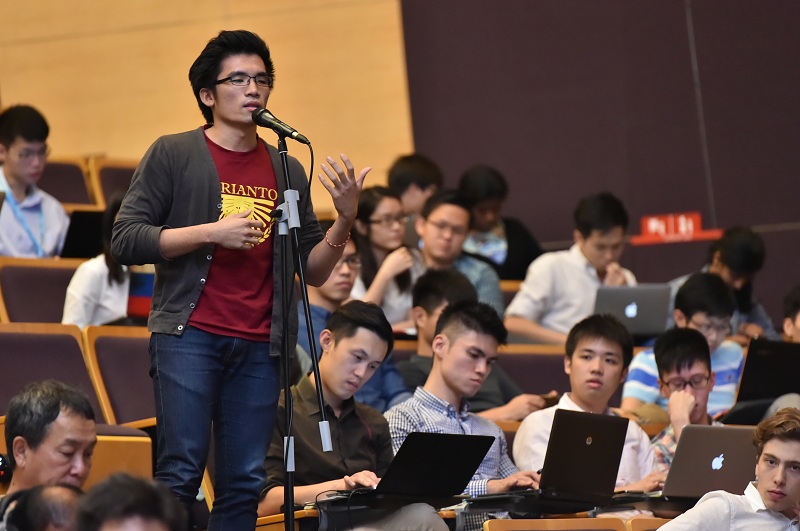
About 200 students from NUS Law School, Faculty of Arts and Social Sciences, Business and International Relations schools, University Scholars Programme and Yale-NUS College, as well as other invited guests, attended the event. During the two-hour dialogue, Dr Ng engaged in a lively and candid question-and-answer session with the attendees.
One attendee, NUS Business School undergraduate Albert Ho, asked if more could be done to energise and motivate Full-time National Servicemen (NSFs) and Operationally-Ready National Servicemen (NSmen) who were in non-combatant roles.
Dr Ng replied that "in our modern day SAF, we can utilise people much better" because while manpower and manual work have been significantly reduced because of advanced technology, the resultant enhancement in information and intelligence gathering has increased the need for analysts. Thus, the non-combatants "are now very valuable to us, because I need them to study the data and tell us what to do" said Dr Ng.
He added that efforts have also been made to match NSF vocations with their relevant experiences and courses of study: "What we've done is to expand the number of vocations and we tried to reduce the divide between combat and non-combat (roles), because in the modern arena, that s less relevant."
Added Dr Ng: "That was also the reason we opened up the Volunteer Corps. We felt that there would be older Singaporeans, women, new citizens with expertise who believe in the defence of Singapore and who d be able to add their expertise."
On the topic of military technological advancement, NUS student Bernard Leong wanted to know if a fully-mechanised army was a possibility in the future.
"I like that thought," Dr Ng said to laughter from the floor, before explaining that the Singapore Armed Forces (SAF) had already adopted unmanned systems in several areas. However, he added: "I wouldn't say that that would be your starting point (using technology to the extent that it replaces NS). It may be a consequence; if you can do it, fine."
Besides taking questions from the floor, Dr Ng also answered questions that had been submitted online. When asked about his perspective on whether NS and In-Camp Training cause NSmen to be less competitive than their foreign counterparts in the global economy, Dr Ng said: "We are aware of that, and we've be trying to work with employers to make NS count." He then highlighted the Advisory Council on Community Relations in Defence, which recently set up a council specifically to engage employers.
He also expressed his hopes that local employers would follow in the footsteps of the United States: "In many countries, if you have military training, it's a plus. And I will tell you that s an enlightened employer. In the US, one of the best things to put on your resume is that you came from the US military.
"In the military sense, we ask you to plan, we throw you in an uncertain environment, we give you a few objectives and then tell you to go implement. That's similar to the business environment. So I think we have to win that battle of convincing employers to make sure that they realise that when they have employees who have commanders, for instance. Because they can take charge of men and they have experience that they can also transfer (those skills) to the civilian (environment)."

ALSO READ IN OPS & TRAINING
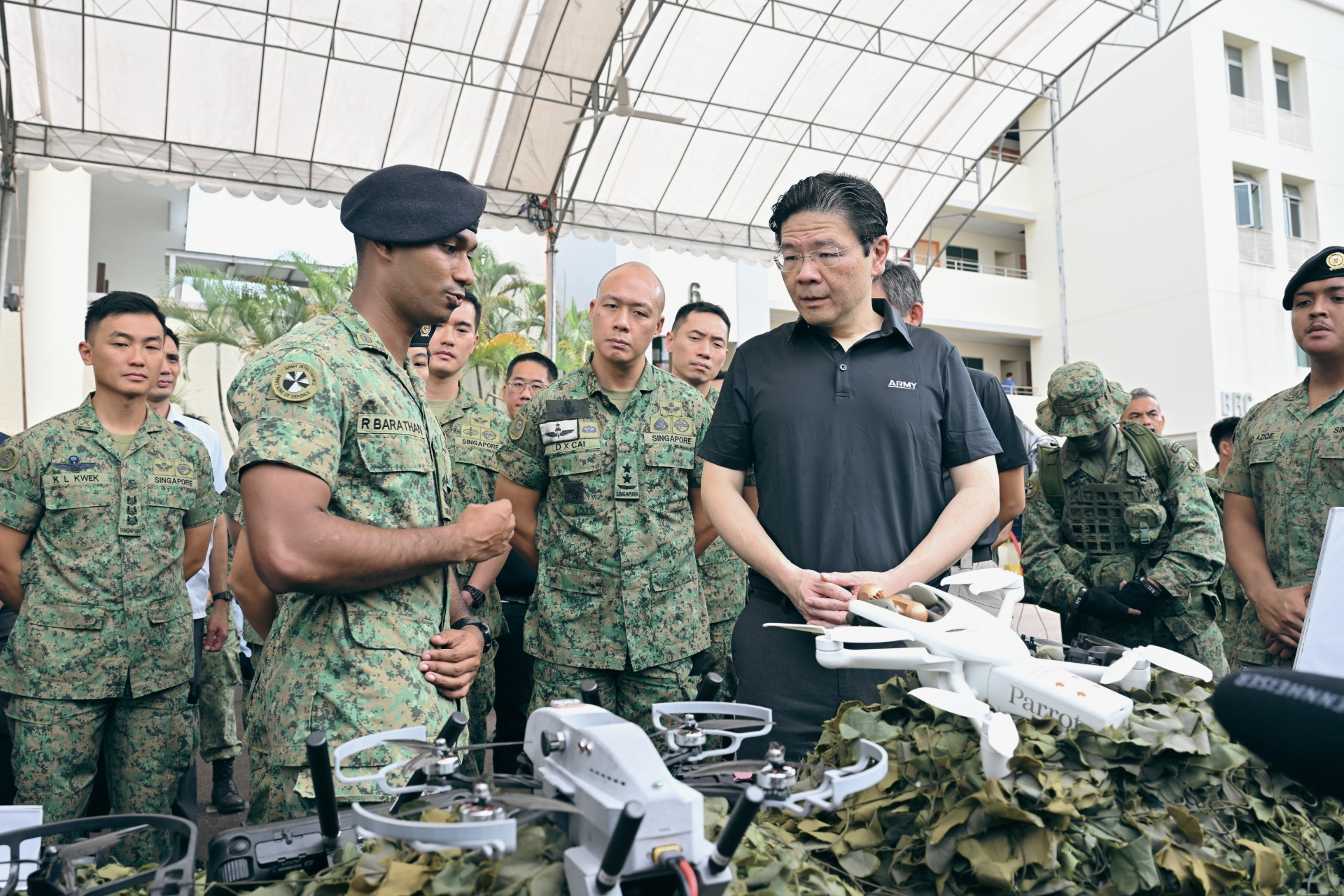
Prime Minister Lawrence Wong observes SAF’s sense-strike integrated capabilities
09 Apr 2026
He witnessed the SAF’s ongoing efforts in leveraging advanced robotics and cross-Service integration to secure Singapore’s interests in an increasingly volatile world.
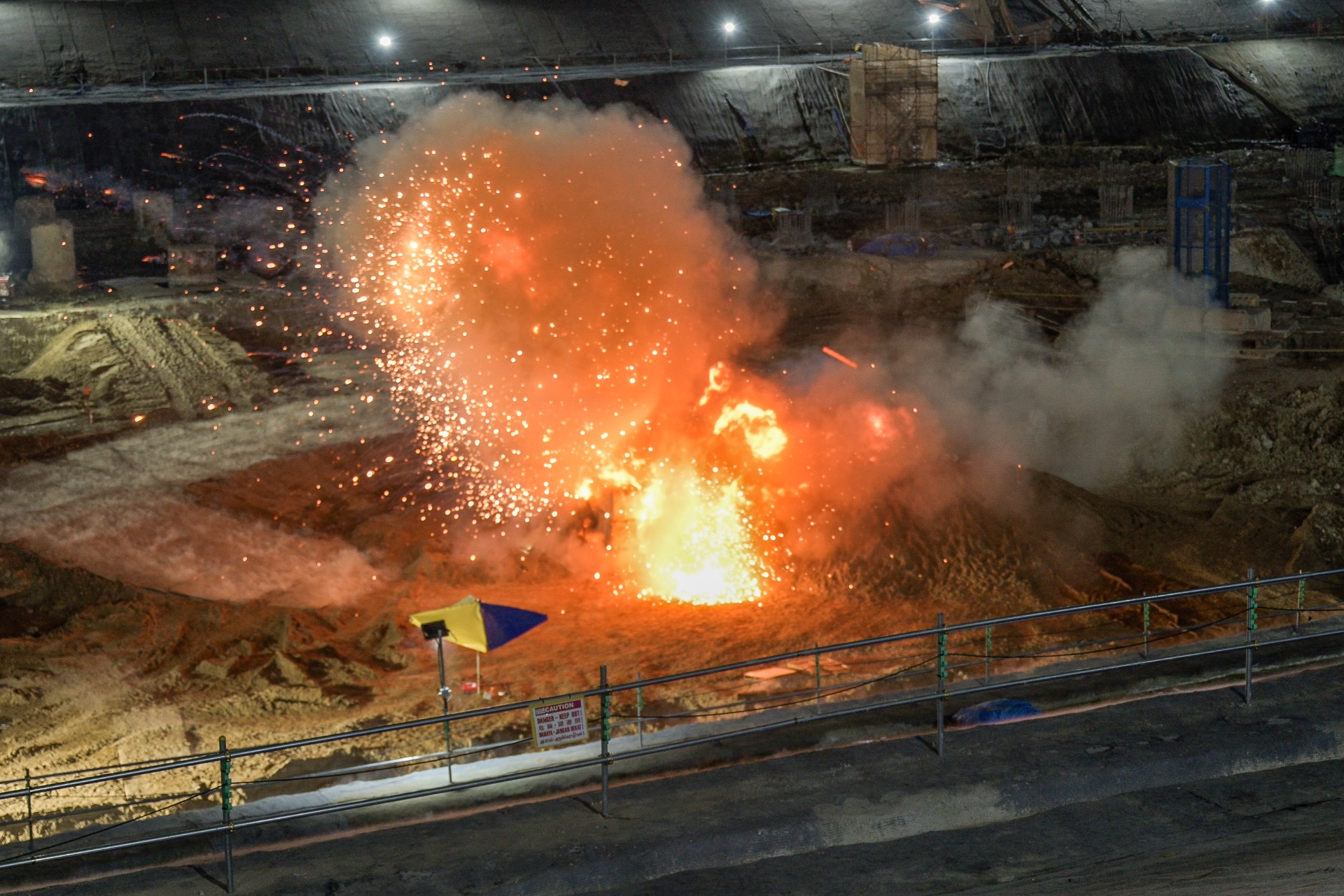
SAF detonates 250kg WWII bomb uncovered at Tanah Merah Coast Road
02 Apr 2026
On 2 Apr, the SAF’s Explosive Ordnance Disposal (EOD) team successfully disposed of an unexploded war relic found at Tanah Merah Coast Road.
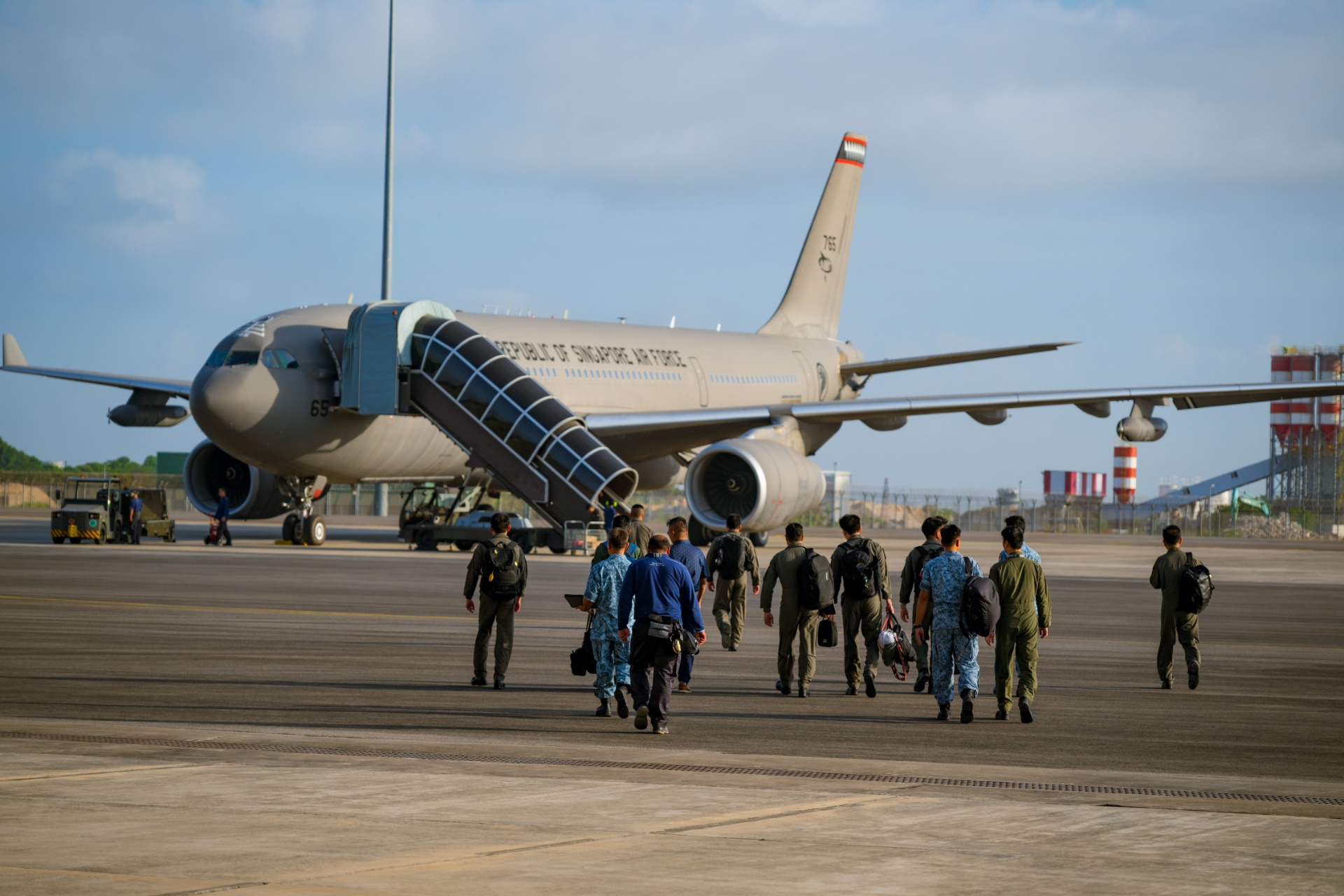
Flying into the unknown: Inside RSAF’s mission to bring S’poreans home from Middle East
28 Mar 2026
Despite the risks and complex challenges of flying in a conflict zone, the men and women of the RSAF pulled off a successful mission through careful planning and hard work.