
OPS & TRAINING
'BRAINS' MADE SMARTER
14 Nov 2005
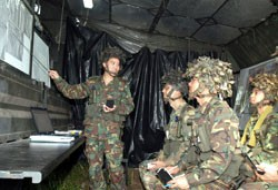
The centralised command post is the 'brains' for military operations it is where commanders gather, analyse information and make vital decisions that set the scene on the battlefield.
But as the tempo of military operations quickens and the time between decision-making and execution shortens, the traditional mode of battle procedure could become a liability in warfare.
A centralised command post, with its higher transmission signature and larger physical footprint, also makes it more vulnerable to enemy attacks. With commanders gathered together and away from their men, communication with their troops may also be hindered. And setting up and tearing down a co-located command post takes time precious seconds that can win the battle.
A team from the Singapore Armed Forces (SAF) Centre for Military Experimentation (SCME) offers an innovative alternative to the centralised command post.
Through network-centric experiments on Integrated Knowledge-based Command and Control (IKC2) ideas, the SCME's Mission Mate team has come up with the Command Post Anywhere (CPA) concept.
Different components of a command post are distributed to various locations yet operating as effectively as in the traditional centralised model.
Distributed teams share information through video conferencing, text chatting or Voice-Over-IP, and can conduct discussions over a virtual map.
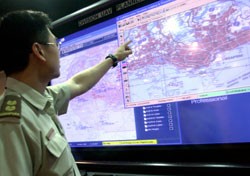
Tools like geographical information services that provide commanders with detailed map information of roads and landmarks, 3D-visualisation and simulations also give soldiers greater situational awareness, to better visualise and overcome war-fighting challenges.
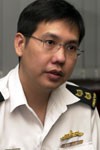
One of the team's leaders, Division Manager from DSTA, Lieutenant-Colonel (LTC) Chew Lock Pin, highlighted an advantage of the CPA: "With a distributed structure, we achieve better optimisation of personnel. Commanders and intelligence personnel can be with the frontline troops, while logistics staff can be with the logistics team."
Thus, by leveraging on technology, members of the CPA are still able to conduct operational analysis and planning as if they are in the same command post, yet have the flexibility of moving the men about quickly.
Currently, the SAF is one of a handful of militaries at the forefront of this new concept. While on exercise in Australia last year, soldiers from the 8th Armoured Brigade tested the system and gave it the thumbs-up.
"The soldiers are comfortable with the system because they are used to such technologies. While preparing for one experiment, we only had a day and a half to train the soldiers and we were concerned they will not be able to use the system well. But they adapted quickly and had no problems with it at all!" recalled LTC Chew (left).
DSTA's Director (Command, Control, Communications, Computers & Information Technology), Mr Teo Chin Hock, is another key contributor to the team.
He said the changing profile of SAF soldiers, who are better-educated and more technologically-savvy, has definitely enhanced the use of such new ideas.
"This is a people-driven concept; young soldiers used to the Internet, connectivity and broadband networks expect such things during their National Service too. So we should provide such technology support to them," he said.
Revealing plans for the future, LTC Chew said the team hopes to further increase the CPA's mobility by moving it onto vehicles. Technical factors like bandwidth will also be improved.
For its outstanding contributions, the Mission Mate team, comprising members from the Ministry of Defence's Future Systems Directorate (FSD), DSTA, and Singapore Technologies Electronics, was awarded the Defence Technology Prize 2005 Team (Engineering) Award.
14 Nov 05 - Recognising the best of S'pore's defence technology talents
14 Nov 05 - He has the DNA for defence science


ALSO READ IN OPS & TRAINING
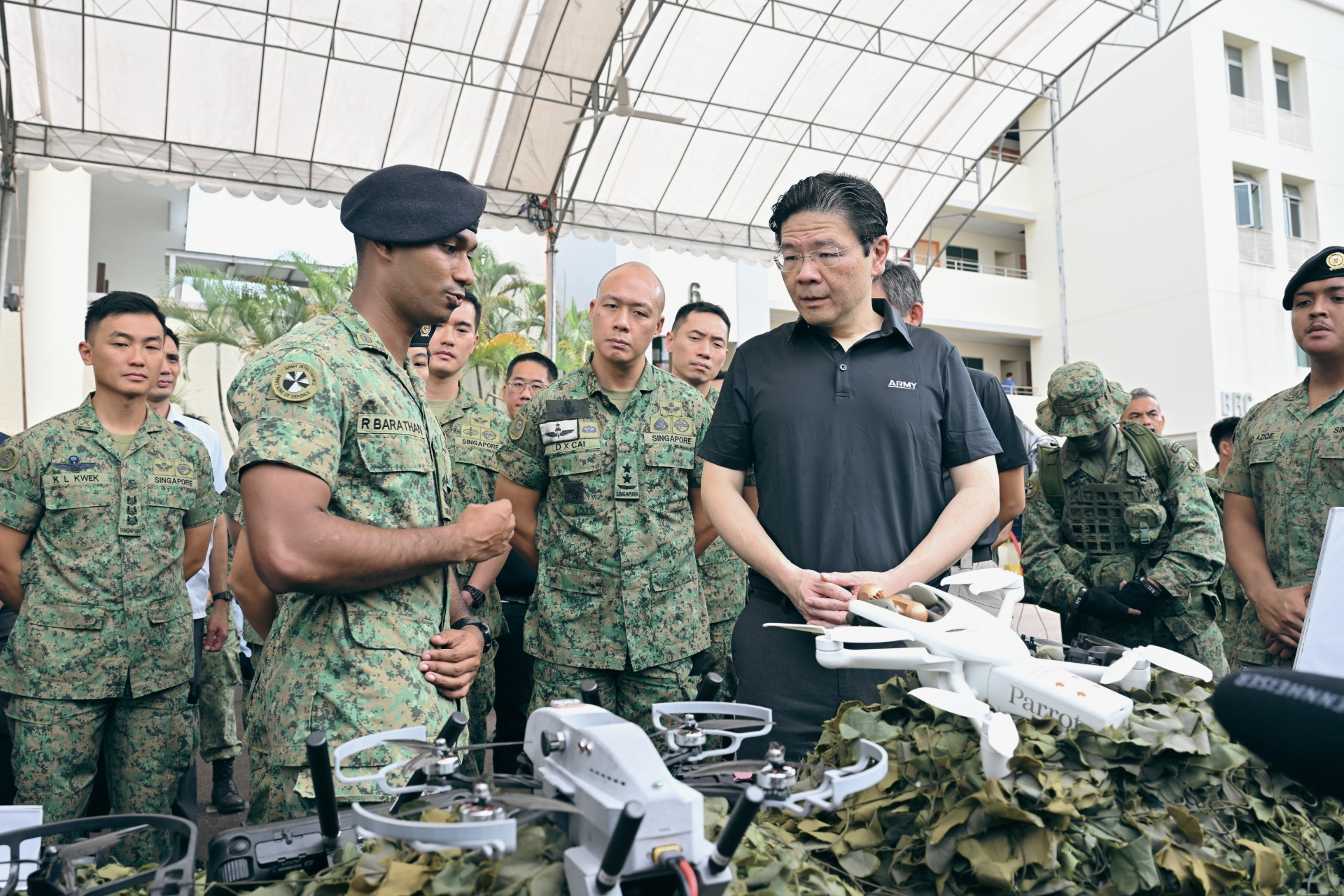
Prime Minister Lawrence Wong observes SAF’s sense-strike integrated capabilities
09 Apr 2026
He witnessed the SAF’s ongoing efforts in leveraging advanced robotics and cross-Service integration to secure Singapore’s interests in an increasingly volatile world.
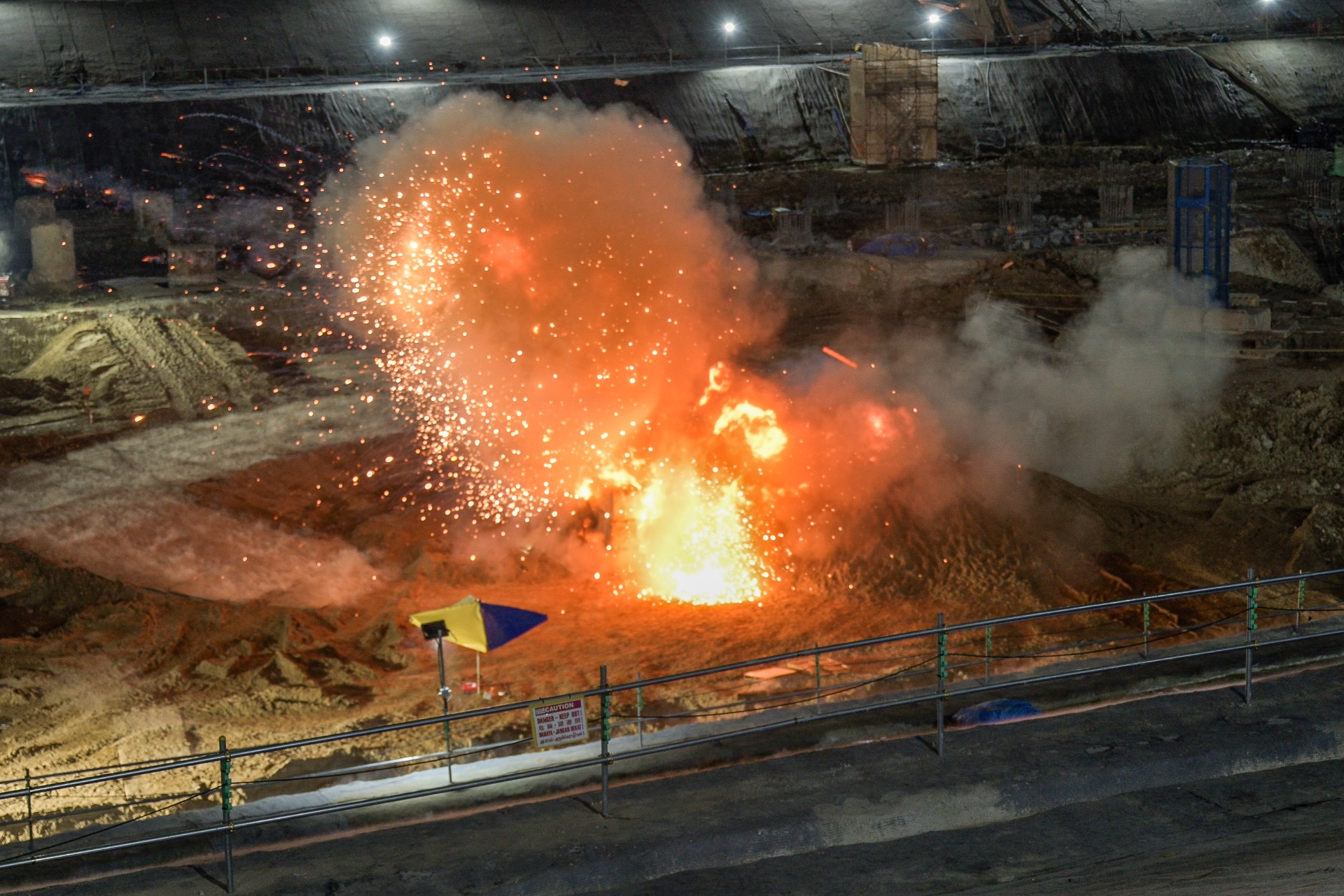
SAF detonates 250kg WWII bomb uncovered at Tanah Merah Coast Road
02 Apr 2026
On 2 Apr, the SAF’s Explosive Ordnance Disposal (EOD) team successfully disposed of an unexploded war relic found at Tanah Merah Coast Road.
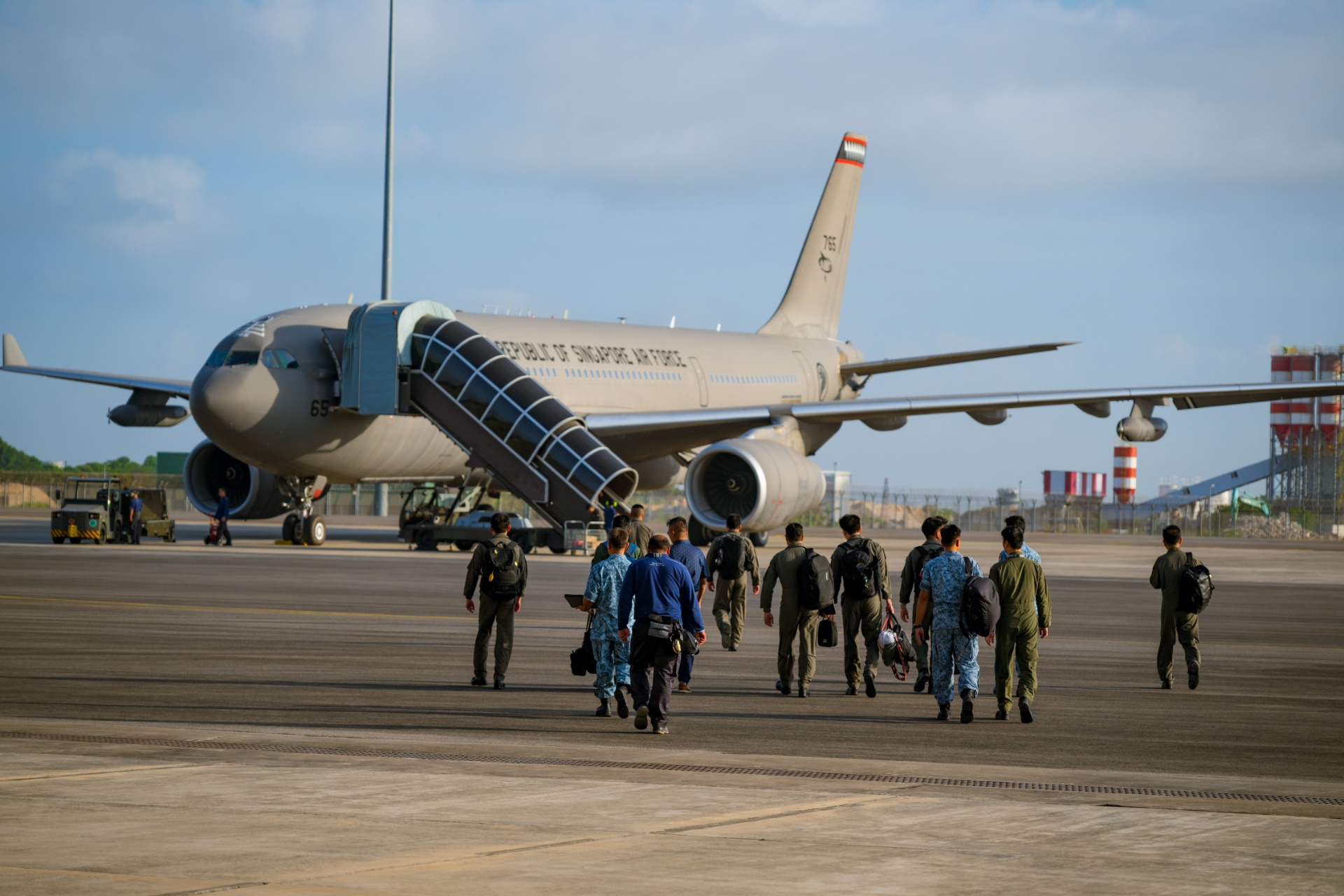
Flying into the unknown: Inside RSAF’s mission to bring S’poreans home from Middle East
28 Mar 2026
Despite the risks and complex challenges of flying in a conflict zone, the men and women of the RSAF pulled off a successful mission through careful planning and hard work.